Researched by Helena DeMaria-Williams
Active IngredientAlpha Hydroxy AcidGlycolic Acid
INCI: Glycolic Acid
Glycolic acid is the smallest alpha hydroxy acid (AHA), derived from sugarcane. It works by loosening the bonds between dead skin cells, allowing them to shed more easily and revealing fresher skin beneath. With regular use it also stimulates collagen synthesis, increasing skin thickness and firmness over time.
Typical Concentration
Best For Skin Types
CAS Number
79-14-1
What are the benefits of Glycolic Acid?
Is Glycolic Acid safe? Key considerations
Can Glycolic Acid cause irritation?
Medium RiskCan cause stinging, burning, redness, and peeling, particularly at concentrations above 10% or below pH 3.5. Sensitive skin types should patch test and start with lower concentrations. EU Annex III restricts leave-on products to a maximum of 10% at pH ≥3.5, with mandatory label warnings (SCCS opinions 0370/00 and 0799/04).
Does Glycolic Acid increase sun sensitivity?
Yes RiskAHAs increase the skin's sensitivity to UV radiation. SPF 30+ broad-spectrum sunscreen should be used daily during glycolic acid treatment. The EU Annex III restriction includes a mandatory warning to use sun protection.
Is Glycolic Acid safe during pregnancy?
CautionLow-concentration leave-on products (under 10%) are generally considered low risk during pregnancy as systemic absorption is minimal. Professional-strength treatments (above 20%) should be avoided. There are no robust controlled pregnancy studies; consult a healthcare provider before use.
How does Glycolic Acid work?
Glycolic Acid is a alpha hydroxy acid active used across a range of concentrations depending on the application and product format.
Particularly beneficial for oily and acne-prone and hyperpigmentation and dull skin and anti-ageing concerns and uneven texture skin.
Individuals with sensitive skin, rosacea, eczema, active skin irritation, open wounds, active sunburn should review the considerations above before use.
How do you use Glycolic Acid in your routine?
A step-by-step guide to introducing Glycolic Acid into your skincare routine safely and effectively.
Choose the right concentration
Start with a product containing 4–10% in OTC leave-on products (EU max 10% at pH ≥3.5). Lower concentrations are better for beginners or sensitive skin.
Patch test first
Glycolic Acid has a medium irritation risk. Apply a small amount to your inner forearm and wait 24 hours before using it on your face.
Introduce gradually
Start by using Glycolic Acid 2–3 times per week in the evening. If your skin tolerates it well after 2 weeks, you can increase frequency.
Apply in the evening
Glycolic Acid increases sun sensitivity, so use it in your evening routine. If you use it during the day, broad-spectrum SPF 30+ is essential.
Follow with moisturiser
After Glycolic Acid has absorbed, apply a moisturiser to support your skin barrier. This is especially important when using active ingredients.
Wear SPF daily
While using Glycolic Acid, apply broad-spectrum SPF 30+ every morning, even on cloudy days. Reapply every 2 hours if you're spending time outdoors.
Science & Research
Research references for this ingredient are coming soon.
In our shop
Which products contain Glycolic Acid?
Browse all Glycolic Acid products →
The Inkey List
Glycolic Acid Exfoliating Body Stick
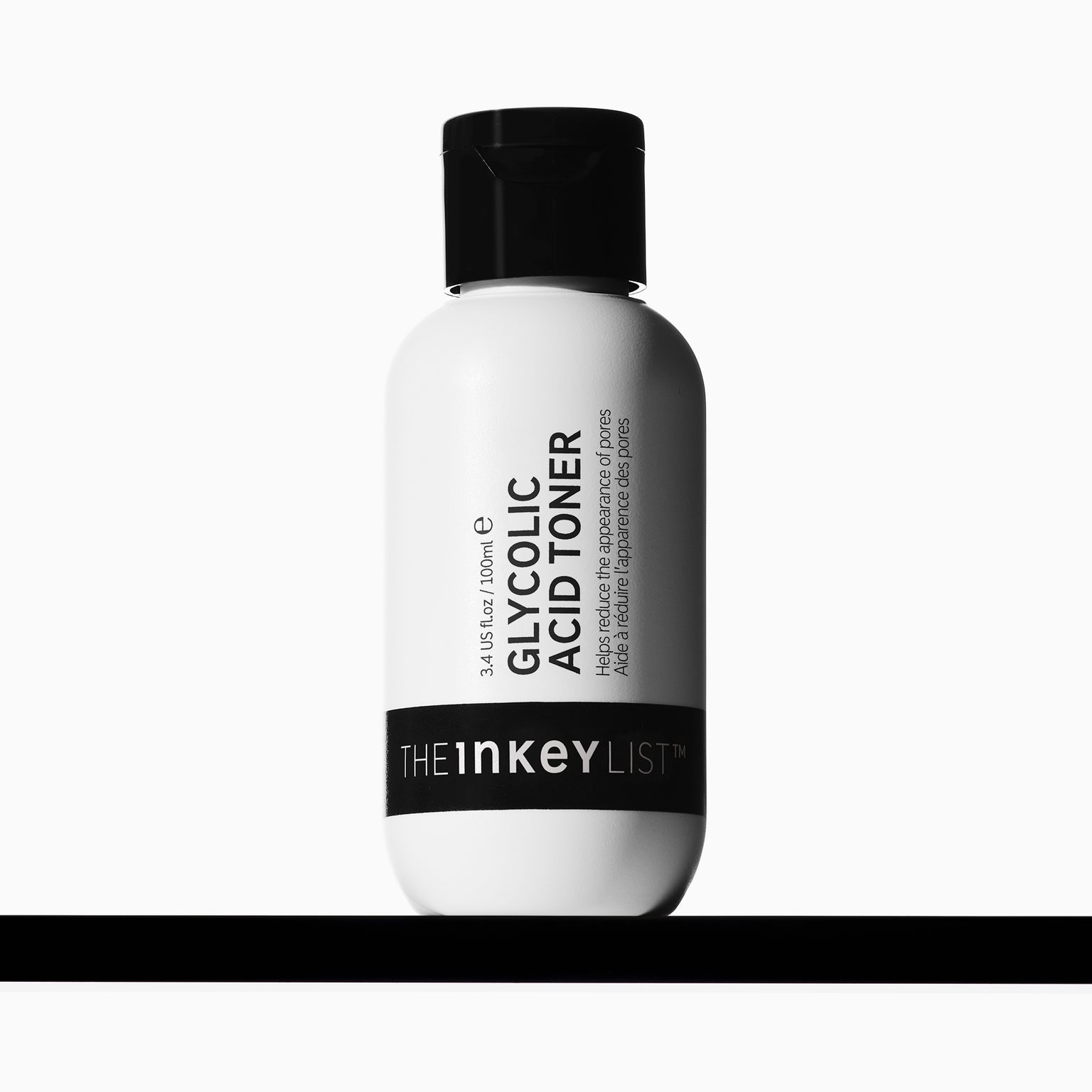
The Inkey List
Glycolic Acid Toner

The Ordinary
Glycolic Acid 7% Exfoliating Toner

The Ordinary