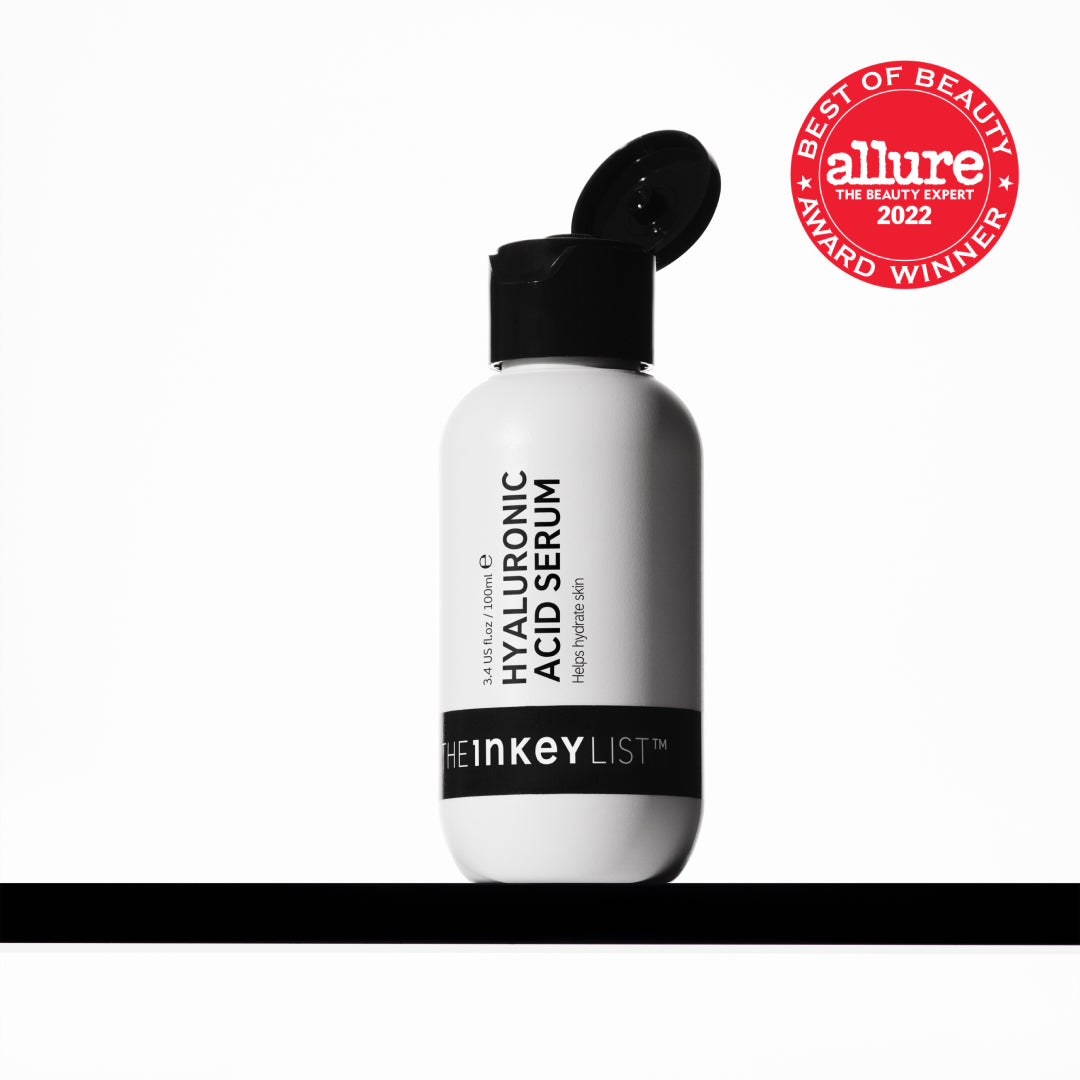
Hyaluronic acid (HA) is one of the most universally beloved skincare ingredients, and for good reason. It's a naturally occurring molecule in the body, found in connective tissue, cartilage, and most relevantly for us, in the skin. Its superpower? It can hold up to 1,000 times its weight in water.
What is Hyaluronic Acid?
Despite the word 'acid,' hyaluronic acid is nothing like AHAs or BHAs. It doesn't exfoliate. It's a large polysaccharide (a type of sugar molecule) that acts as a humectant, drawing moisture from the environment and deeper layers of the skin into the upper layers.
The HA naturally present in your skin degrades with age and UV exposure. By the time you're 40, you have roughly half the HA you had in your twenties. This is part of why skin loses its plumpness and spring with age.
Molecular Weight Matters
Not all hyaluronic acid is created equal. The molecular weight of HA determines how deeply it can penetrate the skin. High molecular weight HA (above 1,000 kDa) sits on the surface, creating a cushioning film that reduces moisture loss. Low molecular weight HA (under 50 kDa) can penetrate deeper into the epidermis for more substantial hydration.
The best hyaluronic acid serums contain multiple molecular weights, working at every layer of the skin simultaneously.
How to Use It
Apply HA to slightly damp skin immediately after cleansing, then seal it in with a moisturiser. Without an occlusive layer on top, humectants can actually pull moisture from your skin in dry conditions, particularly in low-humidity environments.
There's no meaningful upper limit in terms of efficacy. More HA in a formula doesn't equal more hydration. What matters is the molecular weight profile and whether you're layering correctly. Look for serums that list multiple HA variants (sodium hyaluronate, hydrolysed hyaluronic acid) for multi-depth coverage.