Sensitive skin is the one type where doing less reliably beats doing more, and also the one type where people most often talk themselves into doing nothing at all. Neither extreme works. A bare routine of water and a thin lotion leaves the barrier under-supported and just as reactive next month; a crowded routine of acids, retinol, vitamin C and a fragranced 'glow' serum keeps the skin in a permanent low-grade flare. The routine that actually calms reactive skin sits between the two: a short, deliberately boring core of gentle cleanser, barrier moisturiser and mineral SPF, with the option to add a single well-chosen active once the skin is stable enough to take it. This guide covers that core, the order things go on, the products that work in each step, and the slow, careful way to introduce an active without setting off the reaction you were trying to avoid.
What This Guide Means by 'Sensitive Skin'
'Sensitive skin' covers two overlapping situations, and the distinction changes what the routine should do. Genuinely sensitive skin is a baseline trait: a thinner or more reactive barrier, often alongside rosacea, eczema or a tendency to flush, where stinging, redness and tightness appear in response to things most skin tolerates. Sensitised skin is an acquired state, usually self-inflicted: a barrier worn down by over-cleansing, too many actives, physical scrubs, or a fragranced product used daily, so that skin which used to be unreactive has started stinging and flaking. The two feel identical day to day, and the same calm routine fixes both, but it helps to know which you are dealing with. Sensitised skin recovers in a few weeks of careful treatment; genuinely sensitive skin is a long-term baseline you manage rather than cure.
The best ingredients for sensitive skin guide covers which specific ingredients calm reactive skin and why; this one covers how to assemble them into a daily routine. If your skin only became reactive recently, after a new product or a stretch of heavy exfoliation, treat it as sensitised first: strip the routine back to the core below, drop every active, and give it a month before concluding anything about your skin type.
Where We Differ: An Empty Routine Isn't the Goal
You have probably read that sensitive skin should avoid actives entirely. It is sensible advice as a starting point, and there is a real basis for it: reactive skin has a lower tolerance threshold, and the fastest way to calm an angry barrier is to remove everything that could be irritating it. The problem is that 'avoid all actives' often hardens from a temporary reset into a permanent rule, and that goes further than the evidence supports. A stable, well-supported sensitive barrier can usually tolerate one gentle, evidence-backed active, introduced slowly, and often benefits from it.
So this guide leads with the conservative version as the default. The three-step core of gentle cleanser, barrier moisturiser and mineral SPF is the whole recommendation for anyone whose skin is currently reactive, and it is a complete, legitimate routine on its own. The optional active steps that follow are for once the barrier is calm and you have a specific reason to add one, such as niacinamide for persistent redness or azelaic acid for the bumps and flushing of mild rosacea. If in doubt, stay on the core. Nobody with sensitive skin has ever regretted keeping their routine too simple.
How a Sensitive-Skin Routine Should Be Structured
Every effective sensitive-skin routine follows the same shape: cleanse as gently as the day's grime allows, restore water and lipids to the barrier, protect from UV in the morning, and add nothing the skin has to fight. The emphasis is different from other skin types. For dry skin the priority is layering hydration; for oily skin it is managing oil without stripping; for sensitive skin it is minimising the total number of things the skin has to react to while still giving the barrier what it needs to rebuild.
That means short ingredient lists, fragrance-free formulas, and a bias towards leaving things out. The morning routine protects; the evening routine repairs. Both share the same core, and on a reactive day the core is all you use. Three to four products is the realistic shape of a sensitive-skin routine, and adding a fifth should be a deliberate decision rather than a default.
The goal of a sensitive-skin routine isn't to treat the skin. It's to give the barrier the smallest possible number of things to react to while it rebuilds.
The Morning Routine for Sensitive Skin
Step 1 — A Gentle, Non-Foaming Cleanser (Or Water Only)
Mornings rarely need more than water for sensitive skin. Overnight the skin gathers a little oil and the residue of evening products, none of which requires a surfactant to remove. Splashing with lukewarm (not hot) water and patting dry with a clean towel is enough for most reactive skin and removes one daily opportunity for irritation. If you prefer to cleanse, use a gentle, non-foaming cream or lotion cleanser and keep it brief.
La Roche-Posay Toleriane Hydrating Gentle Cleanser (£12.50), CeraVe Hydrating Cleanser (£12.50), Cetaphil Gentle Skin Cleanser (£11.50) and Avene Tolerance Cleansing Lotion are the reliable fragrance-free options, all low-surfactant and quick to rinse. The thing to actively avoid is anything that foams hard or leaves the skin feeling tight and squeaky: sulfates, high-pH soap bars and 'deep cleansing' gels strip the very lipids a sensitive barrier is short of. Water temperature matters more than people expect. Hot water alone can trigger flushing and worsen redness in reactive and rosacea-prone skin, so keep it lukewarm.
Step 2 — A Soothing or Hydrating Serum (Optional)
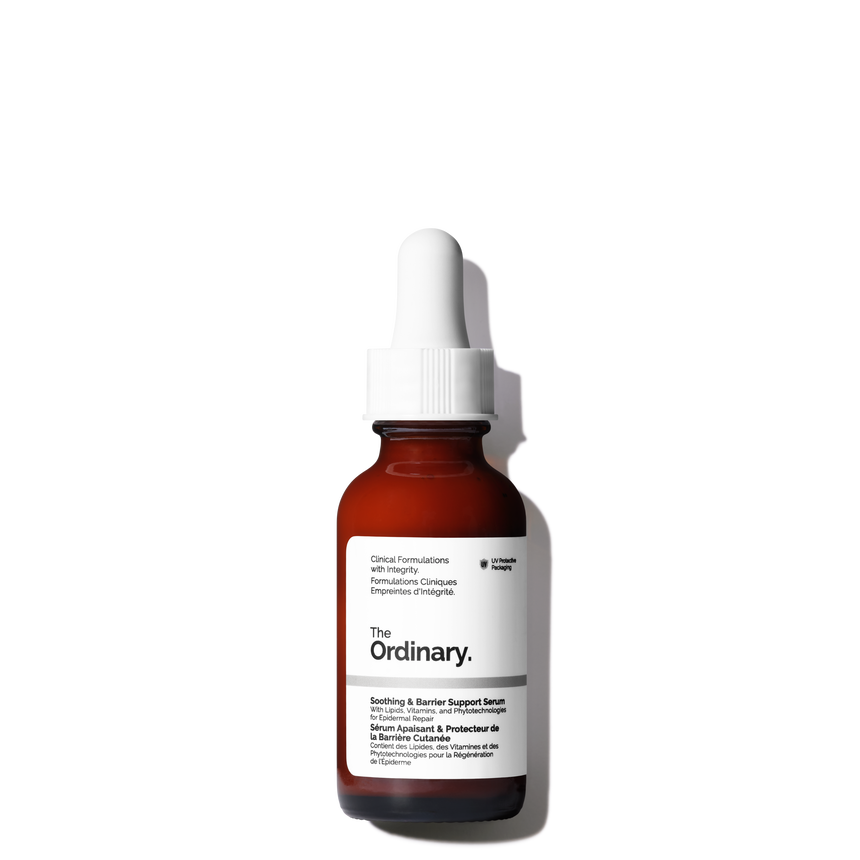
This step is genuinely optional, and on a reactive day it is the first thing to skip. When the skin is calm, a simple humectant or soothing serum on slightly damp skin adds hydration and a layer of comforting actives before the moisturiser. Look for short ingredient lists built around glycerin, hyaluronic acid, panthenol and soothers such as centella asiatica, allantoin or beta-glucan. Avoid serums carrying fragrance, essential oils or a long stack of botanical extracts, which is where a lot of 'soothing' products quietly reintroduce irritation.
Purito Centella Unscented Serum, La Roche-Posay Cicaplast B5 Serum and The Inkey List Hyaluronic Acid Serum are dependable, low-risk choices. The centella asiatica guide covers why cica earns its reputation as the headline soother for reactive skin. If you would rather keep the routine to three steps, you can skip this entirely and go straight to a moisturiser that already contains humectants, which most barrier creams do.
Step 3 — A Barrier-Repair Moisturiser
This is the load-bearing step of a sensitive-skin routine, and the one product worth getting right before anything else. The moisturisers that calm reactive skin are built around ceramides, cholesterol and fatty acids, the lipids that make up a healthy barrier, alongside humectants and soothing agents, and they are free of fragrance and essential oils. CeraVe Moisturising Cream (£12-15.50), La Roche-Posay Toleriane Sensitive, Avene Tolerance Control Soothing Skin Recovery Cream and La Roche-Posay Cicaplast Baume B5 (£8-13) are the benchmark options across price points.
The ceramides guide explains why barrier lipids matter so much for skin that has lost them. Texture should match the season and your skin's current state: a richer cream for winter and during flares, a lighter but still fragrance-free lotion for summer or oilier-but-sensitive skin. The label to look for is 'fragrance-free', not 'unscented', which can mean a masking fragrance has been added to cover a base smell. The fragrance-free skincare guide covers how to read that distinction on a label.
Step 4 — Mineral SPF
Daily broad-spectrum SPF 30 or above matters for every skin type, and for sensitive skin it is also part of the treatment. UV is itself an irritant and a direct driver of redness and rosacea flares, so protecting reactive skin reduces the reactivity. Mineral (physical) sunscreens, which use zinc oxide and titanium dioxide to sit on the surface and reflect UV, tend to suit sensitive skin better than chemical filters, which a reactive barrier can occasionally sting against.
La Roche-Posay Anthelios Mineral One SPF 50, Avene Mineral Cream SPF 50 and Eucerin Sun Sensitive Mineral are formulated for reactive skin and avoid the chalky, drying finish older mineral sunscreens were known for. The trade-off with mineral SPF is a slight white cast, more noticeable on deeper skin tones; if that rules it out, a fragrance-free chemical sunscreen formulated for sensitive skin (such as the La Roche-Posay Anthelios or Bioderma Photoderm ranges) is a reasonable alternative, patch-tested first. SPF goes on last in the morning, after the moisturiser has had a minute to settle.
For reactive skin, sunscreen isn't only protection. UV is one of the triggers, so wearing SPF every day is part of what calms the skin in the first place.
The Evening Routine for Sensitive Skin
Step 1 — A Gentle First Cleanse to Remove SPF
The evening cleanse has one real job: removing the day's sunscreen, and any makeup, without scrubbing. Mineral SPF in particular needs something that can lift it off, and the gentlest way to do that on sensitive skin is a soft cleansing balm, oil or milk massaged briefly onto dry skin and rinsed, followed by the same gentle cream cleanser used in the morning. This 'double cleanse' sounds like more work but is gentler than trying to remove SPF with one aggressive wash.
Choose a fragrance-free first cleanser: an unscented cleansing balm, or a simple cleansing milk such as the Avene or La Roche-Posay removers. If you have worn neither SPF nor makeup, which is rare given the SPF advice above, a single gentle cream cleanse is enough. Keep the water lukewarm and the massage brief, thirty to sixty seconds, with no flannels, muslin cloths or anything textured, which count as physical exfoliation that reactive skin does not need.
Step 2 — One Gentle Active (A Few Nights a Week, Once the Barrier Is Stable)
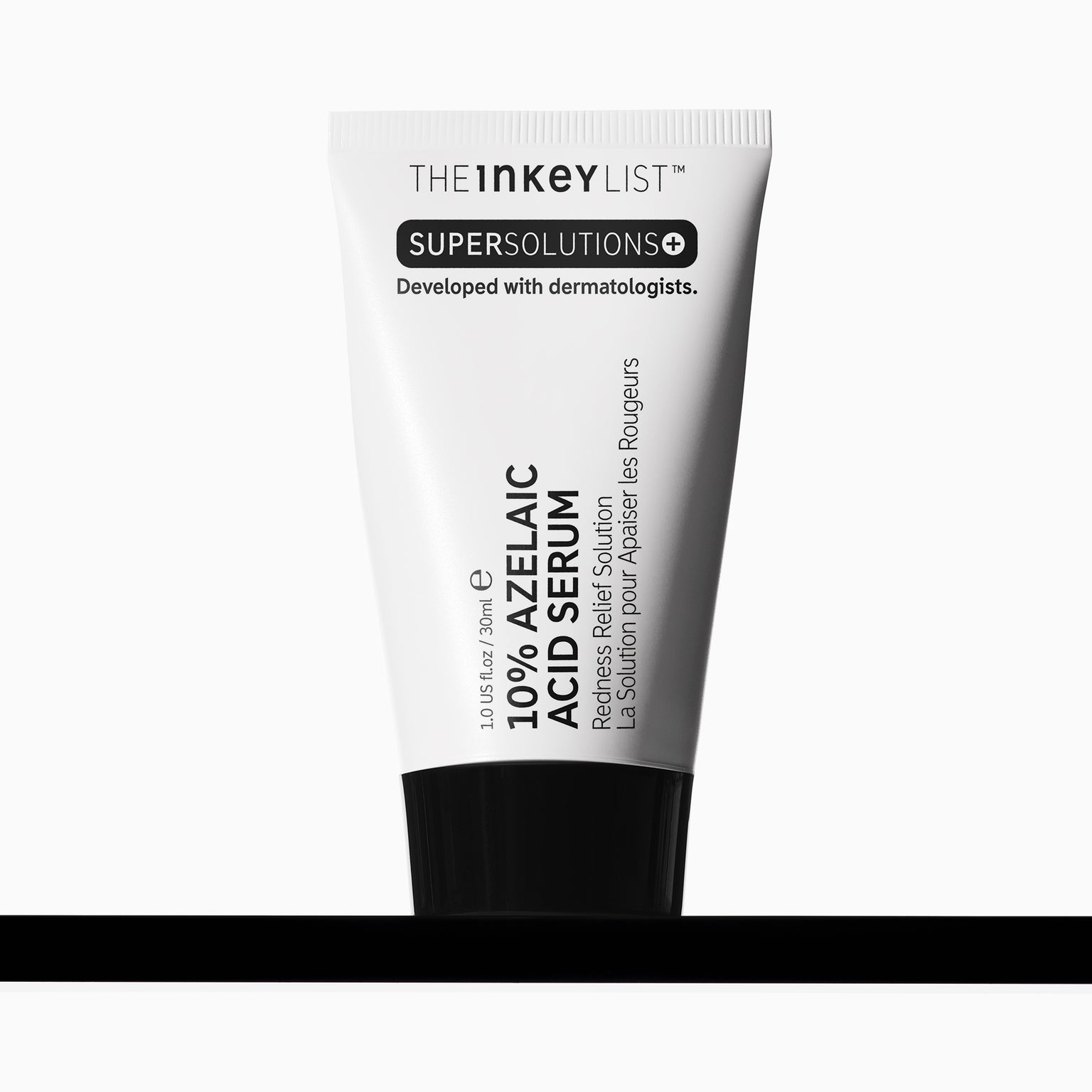
This is the optional step, and it stays optional. Add it only once the core routine has calmed the skin and kept it calm for a few weeks, and only one active at a time. The actives worth considering for sensitive skin are the gentlest, best-tolerated ones: niacinamide for redness and barrier support, azelaic acid for the flushing and bumps of mild rosacea, and low-strength mandelic acid if you want any exfoliation at all.
Niacinamide is the easiest first active. It supports the barrier rather than challenging it, does not increase sun sensitivity, and pairs with everything else. A 5% formula is gentler for reactive skin than the common 10%; The Inkey List Niacinamide and Naturium Niacinamide are good options, layered under the moisturiser. The niacinamide guide covers why it is the most forgiving active in skincare. Azelaic acid is the standout for rosacea-prone skin: it calms redness and clears bumps while being far gentler than the acids and retinoids usually aimed at the same problems. The Ordinary Azelaic Acid 10% Suspension (£8) is the affordable benchmark, though its grippy texture suits some people more than others; the azelaic acid guide covers what to expect. Mandelic acid is the one exfoliant a sensitive routine can usually accommodate: its larger molecule penetrates slowly, which makes it far less likely to sting than glycolic or even lactic acid. The Ordinary Mandelic Acid 10% used once or twice a week is plenty, and the mandelic acid guide explains why it is the gentlest of the AHAs.
What does not belong in a sensitive routine, at least not early: high-strength glycolic acid, L-ascorbic acid vitamin C at 15-20%, strong retinoids, and physical scrubs. None are forbidden forever, but each is a higher-irritation choice that a reactive barrier should earn its way up to, if at all. On nights without an active, skip this step entirely.
Step 3 — Soothing Serum or Humectant (Again)
If you used a soothing or humectant serum in the morning, the same product goes on here, on slightly damp skin, before the moisturiser. If you used an active in the previous step, give it a few minutes to absorb, then apply the serum to buffer it and add comfort. This is also where centella, panthenol or beta-glucan serums do their quiet work, calming any low-grade reactivity before the barrier cream seals everything in.
On a core-only evening, this step and the active step both disappear, leaving cleanse, moisturise, done. That two-step evening is not a lesser routine for sensitive skin; for a lot of reactive skin it is the routine, and the serum and active are refinements layered on top once there is room for them.
Step 4 — A Richer Barrier Moisturiser
Evening moisturisers can be a little richer than daytime ones, since there is no SPF or makeup to layer over. The same barrier creams from the morning work here, in a heavier texture if the skin is dry or flaring: La Roche-Posay Cicaplast Baume B5, CeraVe Moisturising Cream, Avene Tolerance Control, or La Roche-Posay Lipikar Baume AP+M for very dry, eczema-prone sensitive skin. The cream is what holds the night's repair in place while the barrier rebuilds overnight.
During an active flare, this is also the emergency routine: drop every active, simplify to a gentle cleanse and a generous layer of a rich barrier cream, and repeat for several nights until the skin settles. A short occlusive step, a thin layer of plain petrolatum over the cream on the worst nights, slows water loss and speeds barrier recovery, though it is optional and best skipped if your sensitive skin is also breakout-prone.
The Order Things Go On (And Why It Matters)
The general rule is thinnest to thickest: water-based serums before creams, creams before any occlusive. For sensitive skin the more useful framing is fewest reactive variables first: get hydration and soothing actives onto clean, slightly damp skin, then seal them with a barrier cream, and put SPF on top in the morning. Wait times matter less than the internet suggests for gentle products; a humectant serum and a barrier moisturiser can go on within a minute of each other.
The one place spacing helps is around an active. If you have used azelaic acid or mandelic acid, giving it a few minutes before the moisturiser lets it work, and applying a soothing serum or the moisturiser over it afterwards buffers any sting. For the core routine, with no active in play, no waiting is needed at all. Apply, layer, seal, and move on.
How to Introduce One Active Without Triggering a Reaction
The way you add an active to sensitive skin matters more than which active you choose. Rushing it is the single most common reason a sensitive routine slides back into a flare. The method is slow and unglamorous, and it works. First, get the core routine stable for at least two to four weeks, so calm skin is your starting point and you can tell what the active actually does. Then patch test: apply the active to a small area, such as beside the jaw or behind the ear, for a few nights before putting it on the whole face.
When you do start, use the active once or twice a week rather than nightly, and buffer it: moisturiser first, active over it, moisturiser again, which softens the contact without much loss of benefit. Change one thing at a time and wait two weeks between changes, so that if something flares you know exactly what caused it. A little tingling that fades within a minute is usually fine; stinging that lingers, spreading redness, or new bumps mean stop and return to the core. The layering actives guide covers safe pacing in more detail. Most importantly, there is no obligation to add an active at all. If the core routine keeps your skin calm and comfortable, that is a finished routine, not an incomplete one.
How the Routine Changes During a Flare
When sensitive skin flares, with stinging, burning, visible redness or rough flaky patches, the instinct to throw more products at it is exactly wrong. A flare means the barrier is overwhelmed, and the fix is subtraction. Drop every active immediately. Cut back to the gentlest possible cleanse, water only in the morning and a single cream cleanse at night, a generous layer of a fragrance-free barrier cream morning and evening, and mineral SPF in the day. Nothing else.
Hold this stripped-back routine for one to two weeks, until the skin is comfortable again, then reintroduce other steps one at a time with a fortnight between each. Resist the urge to treat the flare with a soothing mask, a new serum or a fragranced 'sensitive' product; the most calming thing you can do is give the barrier fewer things to process. If a flare does not settle within a couple of weeks of this approach, or if it itches intensely, weeps, or recurs in the same spots, that points beyond ordinary sensitivity towards eczema, contact dermatitis or rosacea, which is a conversation for a GP or dermatologist rather than another product.
Common Mistakes Sensitive-Skin Routines Make
Fragrance, including the 'natural' kind. Added fragrance and essential oils are the most common trigger in reactive skin, and 'unscented' or 'for sensitive skin' on the front of a pack does not guarantee their absence. Essential oils, citrus extracts and botanical 'soothing' blends irritate sensitive skin as readily as synthetic fragrance. Read the ingredient list for 'parfum', 'fragrance' or named oils; the fragrance-free skincare guide covers what to scan for.
Over-cleansing and hot water. Cleansing twice a day with a foaming wash, or rinsing with hot water, strips the barrier a sensitive routine is trying to rebuild. Water-only mornings, lukewarm temperatures, and a single gentle evening cleanse are kinder and just as clean.
Changing several things at once. The fastest way to trigger a flare with no idea what caused it is to start three new products in the same week. One change at a time, two weeks apart, is slower, but it is the only way to actually learn what your skin tolerates.
Physical exfoliation. Scrubs, exfoliating flannels, muslin cloths and cleansing brushes all create micro-damage that reactive skin cannot afford. If you exfoliate at all, a low-strength chemical exfoliant such as mandelic acid once or twice a week is gentler and more controllable than anything physical.
Buying the marketing instead of reading the label. 'Sensitive', 'gentle', 'dermatologist-tested' and 'clean' are marketing terms with no fixed meaning, and plenty of products carrying them still contain fragrance or a long extract list. The ingredient list is the only reliable guide; a short, fragrance-free formula from a basic barrier range usually beats an expensive 'sensitive' product with thirty botanicals.
Misreading a reaction as adjustment, or the reverse. A mild, brief tingle from a new active that fades within a minute is usually fine. Stinging that lingers, spreading redness, or new bumps are a reaction, and the answer is to stop, not to push through. Knowing the difference, and erring towards stopping when unsure, is most of what separates a calm sensitive routine from a chronically irritated one.
Frequently Asked Questions
Do I really need a serum if I have sensitive skin? No. The three-step core of gentle cleanser, barrier moisturiser and mineral SPF is a complete routine, and a serum is an optional refinement. If your skin is calm on the core, there is no benefit to adding a serum for its own sake; if you do want one, a simple humectant or centella serum is the lowest-risk place to start.
Can sensitive skin use retinol? Cautiously, and not early. Retinol is one of the more irritating actives, so it is not where a sensitive routine should begin. Once the barrier has been stable for a few months, the gentlest retinoids, low-strength retinaldehyde or an encapsulated 0.2% retinol buffered between layers of moisturiser and used once or twice a week, can be tolerated by some sensitive skin. If it stings persistently at the lowest strength, it is not for you, and azelaic acid covers a lot of the same tone-evening ground far more gently. See the retinol vs retinoids guide for the comparison.
How do I know if a product will irritate me before I use it? Patch test. Apply it to a small area, beside the jaw or behind the ear, once a day for three or four days before using it on your whole face. It is not a perfect predictor, since some reactions only show up with wider or longer use, but it catches the obvious ones and is worth the few days' wait for anything new.
Is fragrance-free really that important? For reactive skin, yes. Added fragrance is the single most common avoidable trigger, and removing it is the highest-leverage change most people with sensitive skin can make. 'Fragrance-free' is the term to look for; 'unscented' can still contain a masking fragrance.
My skin stings when I apply almost everything, even gentle products. Why? Persistent stinging across many products usually means the barrier is compromised, sensitised rather than simply sensitive, and the fix is to strip back to the core routine and let it recover for a few weeks before testing anything new. If stinging continues on even a plain barrier cream after a month of gentle care, or comes with visible inflammation, that is worth seeing a dermatologist about, as conditions like rosacea and perioral dermatitis can present this way.
Can I use the same routine if I have rosacea? Largely yes, with mineral SPF and azelaic acid as the two most useful additions, but rosacea is a medical condition and benefits from a diagnosis. The gentle core here suits rosacea-prone skin well, and avoiding known triggers (heat, hot water, fragrance, harsh actives) overlaps almost entirely with sensitive-skin care. Prescription options exist and are worth discussing with a GP or dermatologist if over-the-counter care is not enough.
When should I see a dermatologist? If reactive skin does not settle after a month of a stripped-back, fragrance-free routine, or if it itches intensely, weeps, flakes in fixed patches, or flushes and bumps across the central face, the cause may be eczema, contact dermatitis or rosacea rather than ordinary sensitivity. These respond to treatments skincare alone cannot provide. See all products suited to sensitive, barrier-supporting routines for the fragrance-free cleansers, soothing serums, barrier moisturisers and mineral sunscreens that make up the core described here.