If your skin stings when you try a new serum, flushes after cleansing, or reacts to products that everyone else seems to tolerate, the instinct is to strip the routine back to nothing and avoid every active on the shelf. That instinct is half right. Sensitive skin does need a calmer routine, but the ingredients that genuinely help are not a void where actives used to be. They are barrier-repairing lipids, humectants, and a small group of well-tolerated soothing agents that reduce reactivity over time. The conservative version of this routine is short and gentle: a non-foaming cleanser, a ceramide moisturiser, and a mineral SPF. The fuller version adds carefully chosen actives like azelaic acid or low-strength exfoliation once the barrier is stable. This guide covers what 'sensitive skin' actually means, the ingredients worth looking for, the ones worth approaching carefully, and how to build a routine that calms reactivity rather than feeding it.
What 'Sensitive Skin' Actually Means (And What It Usually Isn't)
'Sensitive skin' is one of the loosest terms in skincare. Surveys consistently find that roughly half to two-thirds of people describe their skin as sensitive, which tells you the label is doing a lot of work for very different problems. For some people it means a genuine, diagnosable condition like rosacea, eczema, or allergic contact dermatitis. For most, it describes a skin barrier that has been compromised, often by the routine itself: too much exfoliation, harsh foaming cleansers, fragrance, or layering several new actives at once.
The distinction matters because it changes what you should do. A compromised barrier is reversible. When the outermost layer of skin (the stratum corneum) loses lipids and water faster than it can replace them, the skin becomes reactive, tight, and quick to sting. Repair the barrier and the sensitivity often fades. A true skin condition, by contrast, needs management rather than a one-off fix, and sometimes a prescription. Most people reading this fall into the first group, which is good news: the routine that repairs a barrier is also the routine that prevents one breaking down in the first place.
The practical test is simple. If your skin reacts to lots of unrelated products and the reactivity got worse after a period of heavy exfoliation or strong actives, you are most likely dealing with barrier disruption. If you have persistent redness across the cheeks and nose with visible vessels or flushing, that points towards rosacea. If you have itchy, scaly, sometimes weeping patches, that is more consistent with eczema. The last two are worth a conversation with a GP or dermatologist; the first responds beautifully to the ingredients below.
What the Routine Needs to Do
Before the ingredient list, it helps to know what you are actually trying to achieve. A good sensitive-skin routine does three things. First, it stops the damage: it removes the harsh cleansers, fragrance, and over-exfoliation that keep the barrier in a state of low-grade injury. Second, it rebuilds the barrier with the lipids and humectants the skin uses to hold water and stay intact. Third, and only once the first two are in place, it reintroduces the small number of actives that reduce redness and reactivity over the longer term.
Almost everything that goes wrong with sensitive skin comes from skipping straight to step three, or from never leaving it. The fix is not exotic. It is mostly about choosing gentle versions of ordinary ingredients and resisting the urge to do more.
A compromised barrier is reversible. Repair the lipids and humectants the skin uses to hold water, and the sensitivity often fades on its own.
Where We Differ: 'Avoid All Actives' Is Usually Over-Cautious
If you have spent any time reading about sensitive skin, you will have seen the standard advice: avoid actives entirely. No acids, no retinoids, no vitamin C, nothing that does anything. Just cleanse, moisturise, and protect. It is worth understanding why that advice exists, because it is not wrong so much as incomplete.
The blanket 'avoid actives' rule comes from a reasonable place. Most people who irritate their skin do it by using actives that are too strong, too often, or in too many combinations at once. Telling someone to drop all of them is the simplest possible instruction, and for a person whose barrier is actively inflamed it is the correct first move. There is no point introducing azelaic acid to skin that is already stinging from yesterday's glycolic toner. So as a default, especially while skin is reactive, the cautious approach is the right one, and it is where this guide starts too.
Where the blanket rule goes too far is in treating 'active' as a single category to be feared forever. It is not. Once the barrier is stable, sensitive skin can use several well-chosen actives, and some of them actively reduce sensitivity. Azelaic acid calms the redness of rosacea-prone skin. Low-strength niacinamide measurably strengthens the barrier. Mandelic acid, the gentlest of the alpha hydroxy acids, exfoliates slowly enough that reactive skin often tolerates it when glycolic acid is out of the question. The honest position is not 'use whatever you like', it is this: the conservative default is to keep things minimal, and the bolder option of adding one gentle, evidence-backed active at a time is available to you once your skin is calm. You decide which you want, and you are never pressured into the second.
The thing that does far more damage than a sensibly chosen active is the part of the routine people rarely suspect: fragrance, essential oils, foaming cleansers that leave skin tight, and the habit of changing several products at once. Get those right and most 'sensitive skin' becomes a great deal less sensitive, with or without actives.
Niacinamide: The Barrier Strengthener
Niacinamide (vitamin B3) is the closest thing sensitive skin has to a universal recommendation. At concentrations of around 2 to 5 per cent it increases the skin's production of ceramides and other barrier lipids, which directly improves the skin's ability to hold water and resist irritants. Several studies have shown it reduces transepidermal water loss, the technical measure of how 'leaky' a barrier is. For reactive skin, a stronger barrier is the whole game.
It is also one of the best-tolerated actives in the catalogue. Unlike acids or retinoids it has no exfoliating or cell-turnover effect, so there is no sting, no purge, and no sun-sensitivity downside. The main caveat is concentration: very high-percentage niacinamide products (10 per cent and above) can occasionally cause flushing in people who are already reactive, so for sensitive skin a 4 to 5 per cent product is the sensible choice rather than the maximum-strength versions marketed for oily skin.
Niacinamide also pairs comfortably with almost everything, which makes it a low-risk first active to introduce once a barrier-repair routine is established. If you only add one thing beyond a moisturiser and SPF, this is the one with the best evidence-to-risk ratio.
Ceramides: Replacing What the Barrier Lost
Ceramides are the lipids that make up a large share of the 'mortar' between skin cells. When the barrier is compromised, ceramide levels drop, water escapes, and irritants get in more easily. Moisturisers that supply ceramides (often alongside cholesterol and fatty acids, the other two components of the natural lipid matrix) help rebuild that mortar directly.
For sensitive skin a ceramide-containing moisturiser is arguably more important than any serum. It is the step that does the structural repair. The research on barrier creams is consistent: replacing the skin's own lipid profile speeds recovery from irritation and reduces reactivity. There is no real downside, no concentration to fuss over, and no reason to be sceptical of the category; ceramides are part of healthy skin, not an additive to it.
Look for a moisturiser that lists ceramides reasonably high on the ingredient list and pairs them with humectants like glycerin. The fragrance-free versions from barrier-focused brands are the obvious starting point, and they tend to be inexpensive relative to how much work they do.
Centella Asiatica (Cica): The Calming Standout
Centella asiatica, often labelled 'cica' on Korean and increasingly Western products, is the soothing ingredient sensitive skin is most likely to benefit from. Its active compounds (madecassoside, asiaticoside, and asiatic acid) have anti-inflammatory and wound-healing effects with a genuinely solid body of evidence behind them. It is one of the few 'calming' botanicals that earns the description rather than just borrowing it for marketing.
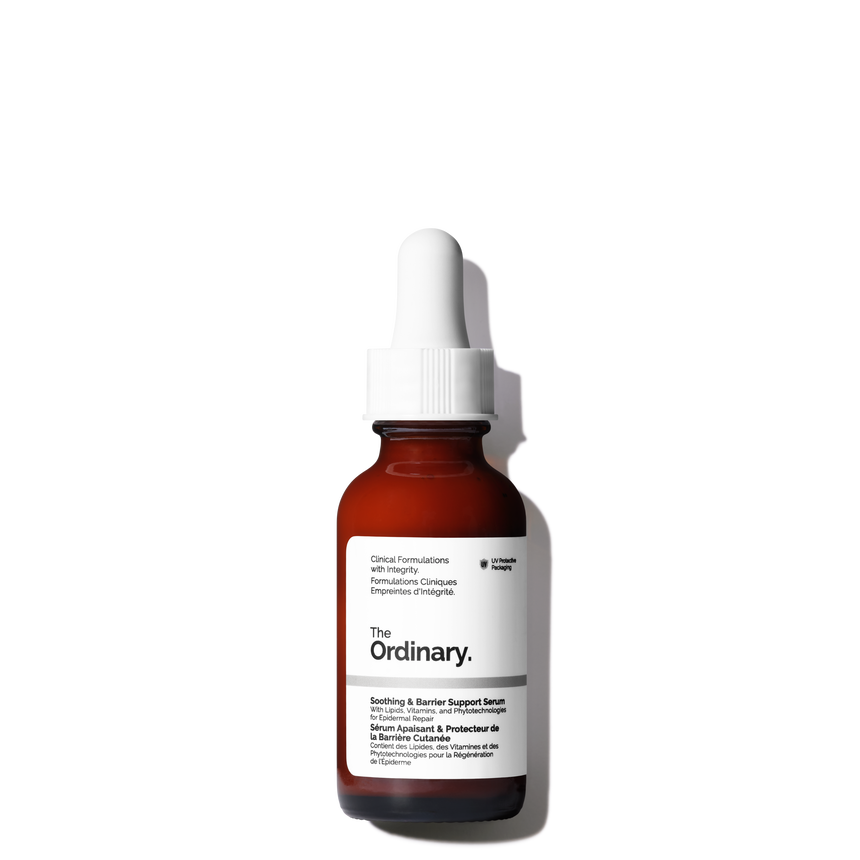
For reactive, easily flushed skin, centella reduces visible redness and supports barrier recovery without any of the irritation risk that comes with actives. It is also gentle enough to use morning and night, and it layers well under moisturiser. If your skin runs red and tight, a centella serum or a cica moisturiser is one of the highest-value additions you can make.
One practical note: 'centella' products vary enormously in how much of the actual extract they contain. The unscented, high-percentage versions from brands that specialise in barrier and soothing care will do more than a product where centella appears near the bottom of the list purely for the label.
Panthenol (Vitamin B5): Quiet and Useful
Panthenol is one of those ingredients that appears in almost every gentle formula and almost never gets discussed. It is a humectant that also has mild anti-inflammatory and barrier-supporting properties, and it improves skin hydration and softness. For sensitive skin its value is that it soothes and hydrates without any risk of stinging.
You rarely need to seek panthenol out as a standalone, because it is already in most well-formulated moisturisers and soothing serums. But it is a good sign when you see it on a label, and it is one of the reasons cica and barrier-repair products feel as comforting as they do.
Azelaic Acid: The Active That Calms
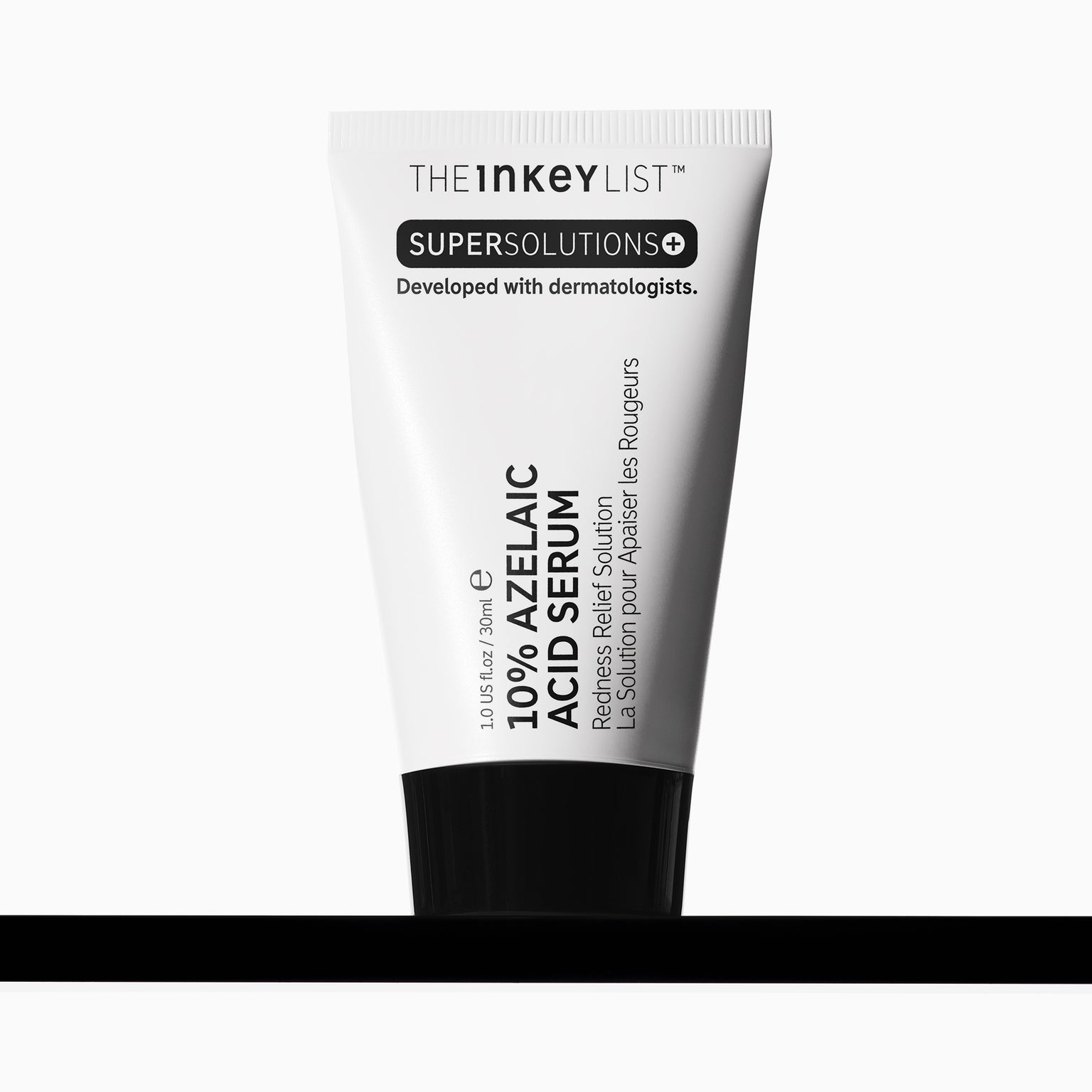
Azelaic acid is the most interesting ingredient on this list for sensitive skin, because it is technically an active yet it tends to reduce redness rather than provoke it. It has anti-inflammatory and antibacterial properties, gently normalises keratinisation, and is one of the best-evidenced ingredients for the redness and papules of rosacea, a condition that overlaps heavily with the 'sensitive skin' label.
Over-the-counter azelaic acid (typically 10 per cent, with prescription versions at 15 to 20 per cent) is well tolerated by most reactive skin. Some people get a mild tingling or warmth in the first week or two, which usually settles. Because it addresses redness, uneven tone, and breakouts at once without the irritation profile of acids or retinoids, it is often the single best 'first active' for someone with sensitive but blemish-prone or rosacea-prone skin.
As with everything here, introduce it on its own, a few times a week to start, once the barrier-repair basics are in place. Give it a fair trial of several weeks before judging it, since its benefits build gradually rather than appearing overnight.
The Humectants: Glycerin and Hyaluronic Acid
Humectants draw and hold water in the skin, and they are about as low-risk as skincare gets. Glycerin is the workhorse: cheap, in almost everything, and exceptionally well tolerated. It supports the barrier's own water-holding capacity and rarely causes a reaction. If a product lists glycerin high up, that is a quiet mark of a sensible formula.
Hyaluronic acid does a similar job and is equally gentle, holding water in the upper layers of skin to keep it plump and comfortable. Neither humectant 'treats' sensitivity in the way azelaic acid or niacinamide do, but they make skin feel less tight and support the overall hydration that a healthy barrier depends on. They are the comfortable, no-decision-required layer of a sensitive-skin routine.
The Soothing Supporting Cast: Allantoin, Bisabolol, Beta-Glucan, Oat
Beyond the headline ingredients, a handful of gentle soothers turn up repeatedly in well-formulated sensitive-skin products, and they are worth recognising. Allantoin is a mild, calming, skin-conditioning agent with a long safety record. Bisabolol, derived from chamomile, has anti-inflammatory properties and is one of the better-tolerated botanicals (unlike many essential oils, which are the opposite). Beta-glucan, often from oats or yeast, hydrates and soothes while supporting the barrier. Colloidal oatmeal is a genuinely evidence-backed anti-itch and anti-inflammatory ingredient, which is why it appears in so many products aimed at eczema-prone skin.
None of these needs to be sought out individually. The point is that when you read a label and see allantoin, bisabolol, beta-glucan, or oat alongside the bigger players, you are looking at a formula designed for reactive skin rather than one that simply prints 'for sensitive skin' on the front and hopes for the best.
Mandelic Acid: If You Want to Exfoliate at All
Exfoliation is the step most likely to tip sensitive skin into trouble, so the honest default is to do less of it, or none, while your barrier is recovering. But if you reach the point where your skin is stable and you want gentle resurfacing, mandelic acid is the alpha hydroxy acid to reach for. Its molecule is larger than glycolic or lactic acid, so it penetrates more slowly and evenly, which translates into far less of the sting and flushing that put reactive skin off acids in the first place.
Used once or twice a week at a low strength, mandelic acid offers the tone-evening and texture benefits of an AHA with a margin of safety that the stronger acids do not have. It is firmly an optional extra rather than a core step, and it belongs at the end of the queue: get the barrier solid first, then consider it. If your skin is currently reactive, this is the ingredient to leave on the shelf until things have calmed down.
Sun Protection: Mineral SPF for Reactive Skin
Daily sunscreen matters for everyone, but for sensitive and especially rosacea-prone skin it is close to non-negotiable, because UV is one of the most reliable triggers of flushing and barrier stress. The practical question is which type. Mineral (or 'physical') sunscreens, which use zinc oxide and titanium dioxide to sit on the skin and reflect or scatter light, are generally the better-tolerated option for reactive skin. They are less likely to sting on application and zinc oxide has mild soothing properties of its own.
Chemical sunscreens are not off-limits, and modern formulations are well tolerated by many people, but if you have had stinging or watering eyes with sunscreen in the past, a mineral formula is the safer first try. Whichever you choose, fragrance-free is the rule, and a comfortable texture you will actually wear every day beats a 'better' product you avoid because it feels unpleasant.
What to Avoid (Or Approach Carefully)
For sensitive skin, what you leave out matters as much as what you put in. The list below is where most reactivity actually comes from, and removing these often does more than any soothing serum.
Fragrance, including 'natural' fragrance and essential oils. Added fragrance is the single most common cause of irritation and allergic contact reactions in skincare, and essential oils (which marketers often present as gentler) are among the worst offenders because they are complex mixtures of reactive compounds. For sensitive skin, fragrance-free is the most important rule there is. Note that 'unscented' is not the same as 'fragrance-free', since unscented products sometimes use a masking fragrance to hide a base smell.
Harsh, high-foaming cleansers. If your skin feels tight or squeaky after cleansing, the cleanser is stripping it. Reach for a non-foaming or low-foaming gentle cleanser, and consider whether you need to cleanse with anything more than water in the morning at all.
Over-exfoliation. Daily acids, scrubs, and exfoliating pads are the fastest route to a damaged barrier. Physical scrubs with rough particles are best avoided entirely; chemical exfoliation, if used at all, should be occasional and gentle.
Too many new products at once. Introducing five products in a week makes it impossible to know what your skin reacted to, and stacking several actives multiplies the irritation risk. Add one product at a time, leave a week or two between additions, and patch test new actives on the inner forearm or behind the ear first.
High-strength actives. Strong retinoids, high-percentage vitamin C at low pH, and concentrated glycolic acid are all worth approaching with caution or postponing until the barrier is solid. None is permanently forbidden, but none belongs in the early days of a sensitive-skin routine.
How to Build a Sensitive-Skin Routine
Start with the minimum and let it prove itself before adding anything. A calm, effective starting routine looks like this. In the morning: a gentle non-foaming cleanser or simply water, a humectant or barrier serum if you like (glycerin, hyaluronic acid, or panthenol based), a ceramide moisturiser, and a mineral SPF. In the evening: the same gentle cleanser, the same moisturiser, and a soothing serum such as centella if redness is a concern. That is a complete routine, and for a lot of people it is all they ever need.
Give that two to four weeks. Once the skin is consistently comfortable, not tight, and not flushing, you have a stable barrier and the option to add one active. Niacinamide at 4 to 5 per cent is the lowest-risk choice. Azelaic acid is the best pick if redness or breakouts are the main concern. Mandelic acid is the option if you specifically want light exfoliation. Add one, a few times a week, and only consider a second active once the first has been tolerated for a few weeks.
The discipline is in the patience. Sensitive skin improves fastest when the routine is boring and consistent, and it relapses most often when someone gets impatient and piles on three new products at once. Slow is genuinely faster here.
When It's Not Just 'Sensitive Skin'
If your skin does not settle on a gentle, fragrance-free, barrier-repair routine after a month or two, the label 'sensitive' may be hiding a specific condition that needs targeted treatment. Persistent central-face redness with flushing and visible vessels suggests rosacea, which responds well to azelaic acid and prescription options a GP can offer. Itchy, scaly, or weeping patches point towards eczema or dermatitis, where colloidal oatmeal and ceramide creams help but a prescription anti-inflammatory may be needed for flares. Skin that reacts sharply to one specific product, especially with itching, swelling, or a rash in the exact area of application, may be an allergic contact reaction worth investigating with patch testing.
None of this is a reason to avoid the ingredients above; barrier repair and soothing care are the foundation for all of these conditions too. But it is a reason to see a GP or dermatologist rather than cycling through more products, if a sensible routine is not getting you there. Genuine, persistent reactivity deserves a diagnosis, not just another serum.
Frequently Asked Questions
Can sensitive skin use retinol? Cautiously, and rarely as a first step. If you want a retinoid, start at the lowest strength, use it once or twice a week, apply it over moisturiser to buffer it, and only once your barrier is stable. Bakuchiol, a gentler retinol alternative, is worth considering for reactive skin that does not tolerate retinoids. Either way, this is an 'add it later' ingredient, not a starting point.
Is fragrance-free really that important? Yes. Added fragrance and essential oils are the most common avoidable cause of irritation and allergic reactions in skincare. For sensitive skin it is the single highest-impact change you can make, ahead of any soothing ingredient you add in.
What is the difference between 'sensitive' and 'sensitised' skin? 'Sensitive' is often used for skin that has always reacted easily, sometimes alongside a condition like rosacea or eczema. 'Sensitised' describes skin that has become reactive through damage, usually from a harsh routine, and is generally reversible with barrier repair. In practice the routine is the same: calm, repair, and reintroduce slowly.
How long until my skin calms down? Most barrier-disruption sensitivity improves noticeably within two to four weeks of dropping the irritants and committing to gentle, fragrance-free barrier care. If there is no improvement after six to eight weeks of a genuinely gentle routine, that is the point to seek a professional opinion.
Do I need a separate product for every soothing ingredient? No. A good ceramide moisturiser plus one centella or barrier serum already delivers most of the soothers worth having (panthenol, allantoin, glycerin, beta-glucan tend to come bundled in well-formulated products). Sensitive skin benefits from fewer, better-chosen products, not more of them.
Can I use vitamin C if my skin is sensitive? Often, if you choose the gentler forms. L-ascorbic acid at a low pH is the most likely to sting; derivatives like sodium ascorbyl phosphate or magnesium ascorbyl phosphate are gentler and worth trying first. As with every active, introduce it on its own once your barrier is stable rather than in the early repair phase.