Centella asiatica is the ingredient most likely to appear on a product sold as 'calming', 'soothing', or 'for sensitive skin', and also the one most readers couldn't define if asked. It travels under several names: cica (short for centella, and the inspiration for a wave of barrier-repair branding), gotu kola, tiger grass, and on an INCI list, Centella Asiatica Extract or one of its purified fractions. The marketing treats it as a near-magical calming herb. The sceptics treat it as Korean-skincare hype with a good story and thin science. The honest position sits between the two: centella is a well-tolerated, barrier-supporting botanical with real, if modest, evidence for soothing inflammation and speeding up skin repair, and it is one of the very few plant extracts with enough clinical backing to earn a place in a sensitive-skin routine. This guide covers what centella actually is, what its active compounds do, where the evidence lands, and how to use it without buying into either the hype or the backlash.
What Centella Asiatica Actually Is
Centella asiatica is a small perennial herb native to the wetlands of Asia, used for centuries in Ayurvedic and traditional Chinese medicine for wound healing and as a general tonic. In skincare it appears as an extract of the leaves and stems rather than as a single isolated molecule, which is the first thing worth understanding: 'centella' on a label is a mixture, and the quality of that mixture varies enormously between products. A cheap, lightly dosed extract sitting near the bottom of an ingredient list is not the same thing as a standardised extract dosed for a specific active content, even though both can legally call themselves centella.
The plant's value comes from a group of triterpenoid saponins collectively known as centelloids. The four that matter are asiaticoside and madecassoside, the glycoside forms, and their corresponding acids, asiatic acid and madecassic acid. When a manufacturer concentrates and standardises these, the result is sometimes labelled TECA (titrated extract of Centella asiatica) or sold as madecassoside on its own. So you will see centella on labels at three levels of refinement: a basic leaf extract, a standardised extract with a stated active percentage, and a single purified fraction such as madecassoside. All three are 'centella', but they are not interchangeable in strength.
The Active Compounds: What Each One Does
Asiaticoside is the fraction most associated with wound healing. It has been shown in laboratory and animal models to stimulate the synthesis of collagen I and III and to support the formation of new tissue, which is why centella-derived creams have a long history of medical use for burns, surgical wounds, and scars in several countries. This is the strand of evidence that gives centella its reputation as a repair ingredient, and it is the best-substantiated thing the plant does.
Madecassoside and madecassic acid are the fractions most associated with calming inflammation. They reduce the signalling of pro-inflammatory messengers in the skin and have antioxidant activity, which translates in practice to less visible redness and a quieter response to irritation. Madecassoside is also the fraction studied most often for barrier support: it appears to help the skin rebuild its lipid layer, which is the mechanism behind centella's usefulness for compromised, over-exfoliated, or reactive skin. If a product highlights one fraction over the rest, madecassoside is the one to look for when soothing is the goal.
Asiatic acid rounds out the antioxidant and anti-inflammatory profile. For most purposes you do not need to track each compound individually; what matters is that the calming and the repairing effects come from different fractions, so a well-made centella product is doing two related but distinct jobs at once. That dual action, soothing inflammation while supporting repair, is what separates centella from a purely anti-inflammatory ingredient that does nothing for the barrier.
Centella is doing two jobs at once: calming inflammation through one set of compounds and supporting repair through another. That dual action is what separates it from a simple anti-redness ingredient.
Where We Differ From the Common Take
You will have read centella described in one of two ways. The first is the marketing version: a miracle calming herb that fixes sensitivity, erases redness, and rescues a damaged barrier overnight. The second is the sceptic's version: a trendy Korean-skincare ingredient with a nice backstory and no real evidence, included so a brand can put 'cica' on the box. Both takes are understandable, and both are wrong in the same way, by treating a modest, well-tolerated ingredient as either a hero or a gimmick.
The marketing overreach is easy to explain. Centella has a genuinely long medical history and a real soothing effect, so it photographs well in before-and-afters and reviews well from people whose skin was irritated and then calmed down, even if some of that calming would have happened anyway once they stopped over-treating. The sceptical reaction is a fair correction to that overreach, and it has a point: a lot of centella products are under-dosed, and much of the online coverage assumes a familiarity with Korean skincare that most readers do not have. Neither caution is unreasonable. What we think both miss is the middle, where most of the actual evidence sits.
Our reading is that centella is a sound, low-risk choice for sensitive, reactive, or recovering skin, with credible evidence for reducing inflammation and supporting repair, and no credible evidence that it does anything dramatic for wrinkles, pigmentation, or acne on its own. It is a supporting ingredient that earns its place, not a treatment ingredient that replaces retinoids or acids. If you go in expecting a gentle, barrier-friendly soother, centella almost always delivers. If you go in expecting it to transform your skin, you will be the next person writing the sceptical review. The honest pitch is the unexciting one, and it happens to be the accurate one.
What the Evidence Shows
The strongest evidence for centella is in wound healing. Standardised centella extracts have been used medically for decades to support the healing of burns, ulcers, and surgical wounds, and the wound-repair literature is where the collagen-stimulating effect of asiaticoside is best documented. This is a higher bar of evidence than most cosmetic ingredients clear, because it comes from a clinical rather than a marketing context.
For cosmetic use, the most relevant evidence concerns soothing and barrier support. Studies on madecassoside and standardised centella extracts report reductions in redness and irritation and improvements in skin hydration and barrier function, including as an adjunct to help calm conditions like atopic dermatitis and to speed recovery after procedures such as laser treatment. There is also a smaller body of work on photoageing: at least one controlled study pairing madecassoside with vitamin C reported measurable improvements in firmness and elasticity over several months, though the vitamin C complicates how much credit centella can take.
What the evidence does not show is centella acting as a standalone anti-ageing or anti-acne treatment. The collagen effect is real in wound repair but has not been shown to deliver retinoid-level wrinkle reduction in normal cosmetic use, and while a soothing ingredient can help calm inflamed acne, centella does not clear breakouts the way salicylic acid or benzoyl peroxide do. The accurate summary is that centella has good evidence for the modest things it claims and no evidence for the dramatic things the marketing implies. That is a stronger position than most botanicals can claim.
Who Centella Works For
Sensitive and reactive skin is the clearest case. If your skin flushes easily, stings in response to actives, or runs red and tight after cleansing, centella is one of the lowest-risk additions you can make. It works as a buffer rather than a treatment, taking the edge off inflammation while the rest of the routine does the heavier work. It is a foundational recommendation for the kind of skin that reacts to everything, which is exactly why it appears in so many products aimed at that audience.
Compromised or over-exfoliated barriers are the second case. If you have been too enthusiastic with acids or retinoids and your skin is now flaky, stinging, and worse than when you started, centella belongs in the recovery routine alongside ceramides, panthenol, and a stripped-back set of products. Its barrier-supporting fractions are well suited to this, and it pairs naturally with the other repair ingredients you would reach for anyway.
Redness-prone and rosacea-adjacent skin often does well with centella, though with a caveat: it is a supportive ingredient, not a medical treatment, and persistent rosacea is best managed with a clinician and evidence-based actives such as azelaic acid. Centella can sit comfortably in that routine as the calming layer, but it is not a substitute for the treatment itself.
People using strong actives are an underrated audience for centella. If you are running a retinoid or an exfoliating acid, a soothing centella layer can make the irritation more manageable and help you stay consistent, which is usually what determines whether an active works in the first place. This is the same logic behind pairing madecassoside with retinoids in a single formula, and it is one of the most practical reasons to keep a centella product around even if your skin is not especially sensitive.
Who does not need centella: if your skin is robust, untroubled by your current routine, and not reacting to anything, centella is a pleasant addition rather than a necessary one. There is no harm in using it, but you will not see a transformation, because there is nothing for it to calm. Spend the money on a sunscreen or an active that does something you actually need first.
Centella vs Niacinamide and the Other Calming Ingredients
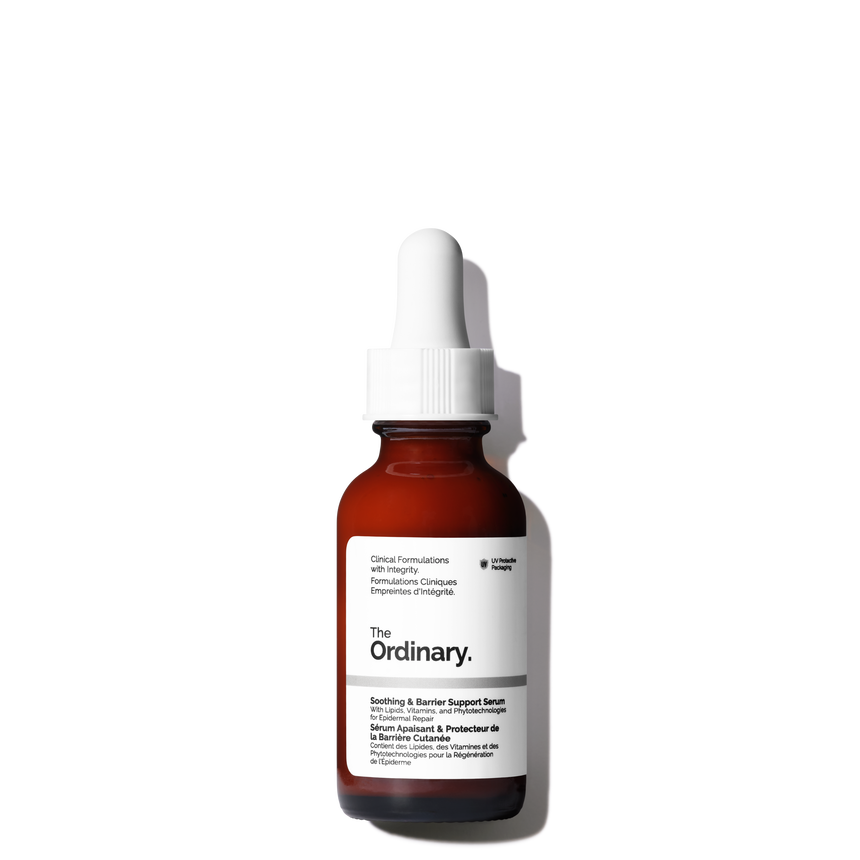
Centella is often compared with niacinamide, because both turn up in soothing, barrier-focused products and both have a calming reputation. They are not really competitors. Niacinamide is the more versatile ingredient, with stronger evidence across barrier support, oil regulation, and pigmentation, and it does more things at once. Centella is the more specifically anti-inflammatory and reparative of the two, with a narrower but well-substantiated remit. The practical answer is that they pair well rather than compete, which is why a formula like The Ordinary's Soothing & Barrier Support Serum combines centella, ceramides, and niacinamide in one bottle.
Against the other common soothers, centella holds up as one of the better-evidenced options. Panthenol and allantoin are reliable, cheap, and genuinely calming, but their evidence is thinner than centella's wound-repair record. Heartleaf and green tea are pleasant antioxidants with real but limited soothing data. Snail mucin is popular and hydrating but less rigorously studied for inflammation. If you want a single calming ingredient with the most clinical history behind it, centella is a defensible top pick; if you want the broadest all-rounder, niacinamide still wins. The strongest routines tend to use both.
Concentrations and Formulation
Centella extract typically appears in skincare at anywhere from about 0.1% up to several percent, and the more meaningful figure, where brands disclose it, is the standardised active content rather than the raw extract percentage. A product standardised to a stated madecassoside or total-centelloid percentage tells you far more than one that simply lists 'Centella Asiatica Extract' with no further detail. Purified single fractions such as madecassoside are usually used at lower percentages, roughly 0.1% to 1%, because they are concentrated.
What to look for in a centella-led product: centella high in the ingredient list rather than buried near the preservatives, ideally with a disclosed active percentage; a short, sensible supporting cast for sensitive skin, which means avoiding fragrance, essential oils, and a long list of botanicals that could undo the calming intent; and a texture suited to your skin, since centella turns up in everything from watery ampoules to rich balms. The ingredient itself is stable and not pH-dependent, so you do not need to worry about it degrading the way you would with a vitamin C serum.
A word on 'cica' branding. The cica name has become a general shorthand for 'barrier repair', and some products marketed as cica creams lean more on ceramides, panthenol, or shea butter than on centella itself. That is not a problem, those can be excellent products, but it means the cica label alone does not guarantee a meaningful centella dose. Read the ingredient list rather than the front of the box if centella specifically is what you are after.
How to Use Centella in a Routine
Centella is one of the easiest ingredients to slot into a routine because it is gentle, stable, and compatible with almost everything. It can be used morning and evening, layered under moisturiser, and applied daily without a tolerance-building phase. There is no need to introduce it slowly the way you would a retinoid or an acid, and no need to alternate nights. For most people it sits as a serum, essence, or toner step after cleansing and before the heavier moisturiser.
If you are using it for recovery from over-exfoliation or active overuse, the approach is to strip the routine back to the essentials, a gentle cleanser, a centella serum, a barrier-supporting moisturiser, and sunscreen in the day, and pause the actives until the skin settles. Centella plays a supporting role here; the main therapy is removing whatever caused the irritation in the first place. Reintroduce actives slowly once the barrier is calm, and you can keep the centella layer in place as a buffer.
If you are using it alongside actives rather than instead of them, apply the centella product as the calming layer in the same routine. A common and effective pattern is a retinoid at night followed by a soothing centella step and then moisturiser, which can make the retinoid more tolerable without blunting it. The usual rule of layering thinnest to thickest still applies, but centella is forgiving enough that you do not need to overthink exactly where it goes.
Centella During Pregnancy and Breastfeeding
Topical centella is widely considered safe to use during pregnancy and breastfeeding, and it is one of the more useful ingredients to know about in that context, because pregnancy often comes with new sensitivity and the loss of go-to actives like retinoids. A gentle centella product can take over some of the soothing and barrier-support duties without any of the concerns that rule out stronger ingredients.
One distinction is worth drawing clearly: this applies to topical use at cosmetic levels. Oral gotu kola supplements are a different matter and are generally not recommended in pregnancy, so do not read 'centella is pregnancy-safe in a serum' as permission to take it internally. If you are pregnant and building a pared-back routine, centella belongs on the safe list alongside niacinamide, ceramides, and squalane. As always, run your full routine past your own clinician.
What to Pair Centella With
Centella is one of the most layering-friendly ingredients in skincare. It has no pH requirement, no oxidation issues, and no meaningful incompatibilities, so it sits happily with almost anything. The most natural partners are the other barrier and hydration ingredients: niacinamide for broad support, ceramides and panthenol for repair, and hyaluronic acid for hydration underneath an occlusive.
Its most valuable partnership is with the ingredients that tend to irritate. Pairing centella with a retinoid or an exfoliating acid is one of the better uses of it, because the soothing layer offsets some of the irritation that makes people abandon those actives. This is exactly the role madecassoside plays in retinoid formulas designed to be more tolerable. Centella does not reduce the effectiveness of the active; it just makes the experience of using it more sustainable.
There is nothing centella usefully clashes with, but there is a limit to stacking soothers. Layering four different calming products in the hope of compounding the effect mostly just adds steps and cost. One well-formulated centella product, plus a barrier moisturiser, covers the soothing job for almost everyone. More than that is rarely doing anything your skin can detect.
Products Worth Considering
At the affordable, do-everything end, The Ordinary's Soothing & Barrier Support Serum (around £17.30) is the most sensible single pick. It combines centella with ceramides, niacinamide, and a handful of other calming agents, which makes it a tidy all-in-one for sensitive, reactive skin and a neat demonstration of the centella-plus-niacinamide pairing in one bottle rather than two. For most people looking to try centella, this is where to start.
If you want a fragrance-free centella product specifically, Purito's Wonder ReLeaf Centella Serum Unscented (around £20.50) is a clean, single-minded option, and the unscented formulation matters here because fragrance is one of the more common irritants for exactly the skin type buying a calming serum in the first place. The matching Wonder ReLeaf Centella Toner Unscented (around £20.00) works as an earlier, lighter step if you prefer to build the centella in gradually rather than in one strong layer, and the Wonder ReLeaf Centella Eye Cream Unscented (around £20.00) extends the same approach to the eye area.
For a more concentrated treatment, medicube's Exosome Cica Calming Ampoule (around £22.00) leans heavily on the calming side, while its Zero Pore Madecassoside Pads in the mild formulation (around £24.00) deliver the madecassoside fraction in a low-effort swipe that suits acne-prone skin wanting soothing without a drying agent. For inflamed individual breakouts, Purito's Wonder ReLeaf Centella Spot Patch (around £12.00) is a cheap, targeted way to calm a spot overnight. And because sun protection is non-negotiable for reactive skin, Purito's Wonder ReLeaf Centella Daily Sun Lotion SPF50+ (around £21.00) folds centella into the one step a sensitive-skin routine cannot skip.
What to be wary of: heavily fragranced 'cica' creams aimed at sensitive skin, which work against their own purpose; products that put centella in the marketing but bury it at the end of the ingredient list; and anything promising that centella will reverse wrinkles or clear acne, which is the marketing overreach the evidence does not support. You can browse the wider soothing and barrier-support selection in the shop to compare formulas and price points before committing.
Common Mistakes
Expecting treatment-level results. Centella is a soother and a barrier supporter, not a wrinkle or acne treatment. Used with the right expectations it almost always satisfies; used as a replacement for an active it will disappoint, because it was never meant to do that job.
Buying on the 'cica' label alone. The cica name has drifted to mean 'barrier repair' in general, and plenty of cica products lean more on ceramides or panthenol than on centella. If you specifically want centella, check that it sits high in the ingredient list, ideally with a disclosed active percentage, rather than trusting the front of the box.
Pairing a calming centella product with a fragranced or irritating one. There is little point soothing your skin with one step and provoking it with the next. If you are reaching for centella because your skin is reactive, the rest of the routine should follow the same logic, which usually means fragrance-free and short on unnecessary botanicals.
Stacking soothers and skipping the basics. People sometimes layer three or four calming products while neglecting a proper moisturiser and daily sunscreen, which are the things that actually keep a sensitive barrier stable. One good centella product on top of solid fundamentals beats a shelf of calming serums on top of a poor routine.
Frequently Asked Questions
What is cica in skincare? Cica is short for centella asiatica, the herb also known as gotu kola or tiger grass. The name has also become a general shorthand for 'barrier repair', so some products marketed as cica creams rely as much on ceramides or panthenol as on centella itself. If you want centella specifically, check the ingredient list rather than the branding.
Is centella good for sensitive skin? Yes, it is one of the better-evidenced calming ingredients and a sound choice for sensitive, reactive, or compromised skin. It reduces visible redness and supports the barrier, and it is gentle enough to use daily without a tolerance-building phase. It works best as a supporting soother alongside a good moisturiser and sunscreen.
Centella vs niacinamide: which is better? They do different jobs and pair well rather than compete. Niacinamide is the more versatile all-rounder, with stronger evidence across barrier, oil, and pigmentation. Centella is the more specifically anti-inflammatory and reparative of the two. For the broadest single ingredient, choose niacinamide; for targeted soothing with the most clinical history, choose centella; ideally use both.
Does centella help with acne? Indirectly. Centella can calm the inflammation and redness around breakouts and support a barrier stressed by acne treatments, but it does not clear acne the way salicylic acid or benzoyl peroxide do. Think of it as the soothing partner to an actual acne active, not the treatment itself.
Can I use centella during pregnancy? Topical centella at cosmetic levels is widely considered safe in pregnancy and breastfeeding, and it is a useful soother when stronger actives are off the table. The exception is oral gotu kola supplements, which are generally not recommended in pregnancy. As always, run your full routine past your own clinician.
Can I use centella with retinol or acids? Yes, and it is one of the best reasons to keep it around. A soothing centella layer can make a retinoid or exfoliating acid more tolerable without reducing its effect, which is the same logic behind formulas that combine madecassoside with retinoids. Apply the centella as the calming step in the same routine.
What is the difference between centella and madecassoside? Madecassoside is one of the purified active compounds within centella, the one most associated with calming inflammation and supporting the barrier. Centella extract contains madecassoside along with asiaticoside and the related acids. A madecassoside product is a more concentrated, single-fraction version; a centella extract is the fuller mixture.
How long until I see results? Soothing effects can show up quickly, often within days for redness and irritation, because that is an anti-inflammatory response rather than a structural change. Barrier improvement takes longer, on the order of a few weeks of consistent use. If you are expecting changes to wrinkles or pigmentation, that is not what centella is for, and you will be waiting indefinitely.