Glycerin is probably already in your bathroom several times over. It is the second ingredient in a large share of moisturisers, cleansers and serums, usually straight after water, and it rarely gets a mention on the front of the pack. That is a shame, because glycerin is one of the most effective and best researched hydrating ingredients in skincare. It draws water into the outer layer of skin, helps the barrier recover when it has been damaged and keeps skin supple when the air is dry. It is also cheap, gentle and suitable for every skin type. If you want to know whether a moisturiser will actually hydrate, glycerin's position on the ingredient list is one of the most useful things to check.
What Is Glycerin?
Glycerin, also called glycerol or glycerine, is a small, simple molecule with three alcohol groups. It is colourless, odourless, slightly sweet and very good at attracting and holding water. On an ingredient list it appears as 'Glycerin'.
It is also skin-identical. Your skin makes glycerol naturally, partly from the breakdown of fats in the oil glands and partly from glycerol carried in from the blood. It sits in the outermost layer of skin (the stratum corneum) as part of the skin's own moisturising system, alongside amino acids, urea and sodium PCA.
Cosmetic glycerin can be made from plant oils, animal fats or petrochemicals, and the finished molecule is identical whichever route is used. Most glycerin in skincare today is plant-derived, but the ingredient list will not tell you which source a brand has used. If that matters to you, check whether the product is certified vegan.
What Glycerin Does for Skin
It hydrates. Glycerin is a humectant, which means it pulls water into the stratum corneum and holds it there. Because the molecule is small, it moves into the upper layers of skin rather than simply sitting on the surface. The site's ingredient data describes it as a humectant that draws water from both the environment and the deeper layers of skin.
It supports the barrier. Glycerin helps keep the lipids between skin cells in a flexible, well-ordered state, particularly when the air is dry. In practical terms, skin treated with glycerin loses less water and recovers more quickly after it has been stressed.
It helps skin shed normally. Dry skin often looks flaky because the outer cells are not detaching evenly. Glycerin helps the enzymes that break the bonds between those cells work properly, which is why the site's data lists 'normalising skin shedding' among its benefits.
It protects against irritation. Glycerin has an irritancy rating of 0 in the site's data, and it is often used to soften harsher ingredients. It appears high on the list of acid serums, retinoid products and foaming cleansers for exactly this reason.
Hyaluronic acid gets the headlines. Glycerin, in most formulas, does more of the work.
What the Evidence Shows
Glycerin has been studied in dermatology for decades, and the findings are consistent.
Hydration. Controlled studies have repeatedly found that creams containing glycerin increase skin hydration compared with the same cream without it, and that the effect increases with concentration up to around 10–20%. The site's data puts 1–3% as the minimum effective level and around 10% as optimal for most formulas.
Barrier recovery. When volunteers' skin barrier is deliberately damaged, either by tape stripping or by a harsh cleansing agent, areas treated with glycerin recover their barrier function faster than untreated areas.
The skin's own water channels. Some of the clearest evidence comes from research into aquaporin-3, a channel in skin cells that transports water and glycerol. Mice bred without it have noticeably dry skin with poor elasticity, and applying glycerol, but not other humectants tested, restored their skin hydration. This is part of why glycerin is thought of as working with the skin's biology rather than just coating it.
Eczema-prone skin. In a study on people with atopic eczema, a cream with 20% glycerin improved hydration and barrier function about as well as a urea-based cream. Glycerin is not a treatment for eczema, but it is a well-tolerated part of the moisturisers dermatologists often recommend.
What it does not show. Glycerin will not fade pigmentation, treat acne or reduce wrinkles in any lasting way. Well-hydrated skin looks smoother and plumper, but that effect fades once the product is no longer in use.
Why It's Everywhere
Across the site's catalogue, glycerin appears in 78 of the 120 products for which we have a full ingredient list, roughly two in every three. In 44 of those products it is within the first three ingredients.
The reasons are practical. Glycerin is cheap, stable, works across almost every pH and has a long safety record. It also helps formulators: it stops products drying out in the jar, improves how they spread and helps dissolve other ingredients. Very few ingredients earn their place in a formula in so many ways.
What it lacks is a story. A 'glycerin serum' is hard to sell when the same ingredient is in a £9 moisturiser, so it is rarely the hero on the label. Products that are marketed on another humectant often contain more glycerin than the ingredient they are named after.
Glycerin vs Hyaluronic Acid
Hyaluronic acid is the humectant most people have heard of, and it is a good one. But the two work in different ways and are used at very different levels.
Hyaluronic acid is a large molecule, used at around 0.1–2%. Most of it forms a moisture-holding film on the surface, although smaller fragments can move a little deeper. Glycerin is a much smaller molecule, used at around 3–10% or more, and it moves into the stratum corneum.
You can see this on ingredient lists. In The Ordinary's Marine Hyaluronics, glycerin is the second ingredient, ahead of the marine-derived ingredients the product is named for. In The Inkey List's Hyaluronic Acid Serum, glycerin is fourth, straight after sodium hyaluronate.
Neither is better in every case. Hyaluronic acid gives a light, cushioned feel without stickiness, while glycerin gives more hydration per pound spent. Most good moisturisers use both. The hyaluronic acid guide covers how to get the most from it.
Where We Differ: Glycerin in Dry Weather
You may have read that glycerin and other humectants can make skin drier in cold or dry weather, because with little moisture in the air they pull water up from deeper in the skin instead. This advice has a reasonable basis. Humectants do draw water from wherever it is available, and pure, undiluted glycerin can dehydrate skin. The site's data notes that 99.7% glycerin should not be used on skin.
We see it a little differently for normal products. Moisturisers almost never contain glycerin alone. It is paired with emollients and occlusives such as squalane, dimethicone or plant butters, which slow the loss of the water that glycerin draws in. Glycerin also keeps the barrier lipids flexible in low humidity, which is exactly when skin needs it most. The research showing glycerin improves hydration includes studies carried out in dry conditions.
The cautious, sensible default in winter is to use a glycerin-containing cream rather than a light, water-only serum, or to follow your serum with a moisturiser. That covers the concern without giving up one of the most useful ingredients you can use. If you prefer to apply humectant serums to damp skin and seal them in straight away, that is a reasonable habit too.
Who Glycerin Is For
Everyone, in practice. The site's data lists glycerin as suitable for all skin types, with low ratings for irritation, dryness, purging and clogged pores.
Dry and dehydrated skin. Glycerin is one of the first ingredients to look for. The dry skin ingredients guide and dry skin routine show how to pair it with oils and occlusives.
Sensitive skin. Glycerin is very well tolerated and is often the backbone of formulas made for reactive skin. The sensitive skin guide explains why barrier support comes first.
Oily and acne-prone skin. Glycerin has a comedogenic rating of 0, and because it is not an oil or a fatty acid, it is generally considered 'fungal acne safe'. It is a good way to hydrate skin that is being dried out by salicylic acid or retinoids.
Pregnancy. The site's data rates glycerin as safe in pregnancy, with no reproductive or developmental concerns in the available safety data. The pregnancy-safe skincare guide covers what to check in the rest of your routine.
The only real drawback is texture. Formulas with a lot of glycerin can feel slightly tacky. That is a matter of preference rather than a sign the product is not suited to you, and it usually settles within a minute or two.
How to Use Glycerin
You almost certainly do not need to buy it separately. Look for glycerin within the first few ingredients of your moisturiser or serum. Because ingredients are listed in descending order down to 1%, glycerin in second or third place usually means a meaningful amount.
Use it morning, evening or both. Glycerin does not increase sun sensitivity and has no known conflicts with other ingredients.
Layer it as usual. Water-based serums go on first, followed by creams. If your skin feels tight in dry weather, finish with a richer moisturiser. The layering actives guide explains the order.
Pair it freely. Glycerin works well with niacinamide, panthenol, ceramides and hyaluronic acid, and it makes acids and retinoids easier to tolerate. The panthenol guide and ceramides guide cover two of its most common partners.
Do not use pure glycerin on your face. Pharmacy bottles of neat glycerin are sold for other uses. Diluted in a formula, glycerin hydrates; neat, it can do the opposite.
Products Worth Considering
Every product below lists glycerin within its first four ingredients, using the full ingredient lists in the site's catalogue.
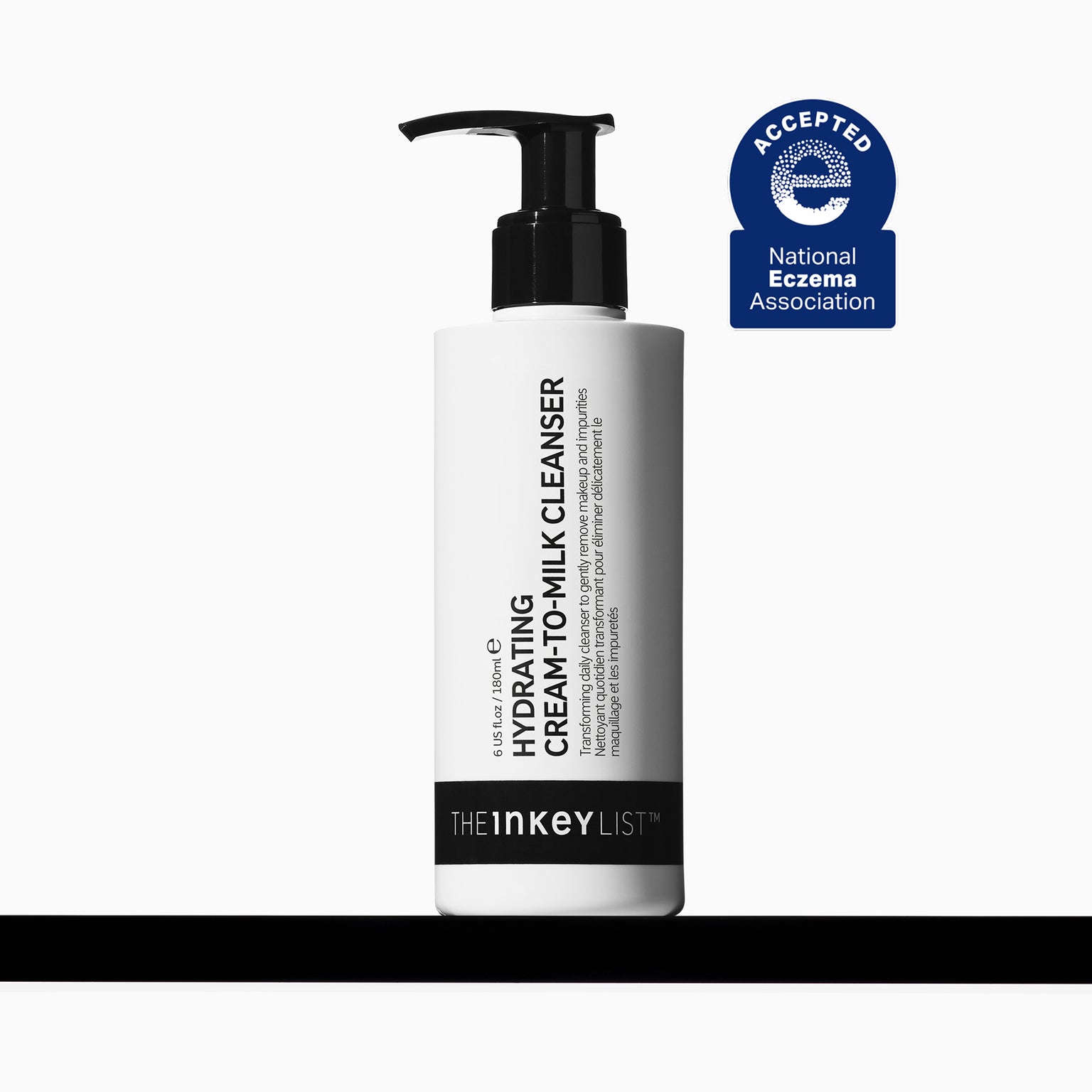
The Inkey List's Glycerin Gentle Purifying Cleanser (around £13.00 for 180ml) is one of the few products named after glycerin, and The Inkey List states it contains 20%. Glycerin is second on the list, ahead of the mild cleansing agents coco-glucoside and cocamidopropyl betaine. It suits skin that feels tight after foaming washes.
Cetaphil's Gentle Skin Cleanser (around £11.50 for 236ml) has a very short formula with glycerin second, followed by cetearyl alcohol, panthenol and niacinamide. It is a sensible default for dry or sensitive skin.
The Inkey List's Omega Water Cream (around £11.00 for 50ml) states 5% glycerin, alongside 5% niacinamide, 3% betaine and a ceramide complex. It is a light gel-cream that works for oily and combination skin.
The Inkey List's Bio-Active Ceramide Moisturiser (around £19.00 for 50ml) puts glycerin second and shea butter third, with ceramide NP further down. This is the kind of humectant-plus-occlusive combination that works well for dry skin in winter.
The Inkey List's Vitamin B, C and E Moisturiser (around £9.00 for 50ml) is a simple budget moisturiser with glycerin second on the list.
For very dry skin, The Inkey List's 10% Urea Moisturiser (around £19.00 for 50ml) pairs glycerin, fourth on the list, with urea, another humectant from the skin's own moisturising system.
If you prefer a serum, The Ordinary's Marine Hyaluronics (around £8.80 for 30ml) and The Inkey List's Hyaluronic Acid Serum (around £9.00 for 30ml) both include glycerin near the top.
You can browse the wider moisturiser, cleanser and serum ranges in the shop.
Common Mistakes
Overlooking it. Glycerin rarely appears in a product's name, but a moisturiser with glycerin second on the list is doing real work, whatever the front of the pack highlights.
Paying extra for a humectant you already have. A product built around a newer or more fashionable humectant may hydrate well, but often largely because of the glycerin in it.
Using a humectant serum on its own in very dry weather. Follow it with a moisturiser, especially if your skin feels tighter after applying it.
Applying neat glycerin. Undiluted glycerin can draw water out of the skin. Use it in a finished product.
Frequently Asked Questions
What does glycerin do for skin? Glycerin is a humectant. It draws water into the outer layer of skin, helps the barrier recover and keeps skin soft and supple, particularly in dry conditions.
Is glycerin better than hyaluronic acid? They work differently. Glycerin is a smaller molecule that moves into the upper layers of skin and is used at higher levels, while hyaluronic acid mainly holds moisture on the surface. Most good moisturisers use both.
Can glycerin clog pores? It is very unlikely. The site's data gives glycerin a comedogenic rating of 0, and it suits oily and acne-prone skin.
Is glycerin good for sensitive skin? Yes. It is one of the least irritating ingredients in skincare and is often used to make formulas gentler.
Can glycerin dry out your skin? Only when used neat or in very high concentrations. At the levels found in skincare products, it reliably improves hydration.
Is glycerin safe during pregnancy? The site's data rates it as safe, with no concerns in the available safety data. Check with your midwife, GP or pharmacist if you have any doubts.
Is glycerin vegan? It can be made from plants, animal fats or petrochemicals, and the label will not say which. Most cosmetic glycerin is plant-derived, but look for vegan certification if this matters to you. See all products containing glycerin for the full range on the site.