Ferulic acid is a plant antioxidant that almost never appears on its own. You usually find it on the ingredient list of a vitamin C serum, close to vitamin E, and the reason is a single line of research from the mid-2000s. In that work, adding a small amount of ferulic acid to a vitamin C and E serum made the vitamins more stable and roughly doubled the protection the serum gave skin against UV damage. That is why the trio became a template. Ferulic acid is useful, well tolerated and worth looking for in the right kind of vitamin C serum. It is not, though, something every vitamin C product needs, and knowing when it matters will save you money.
What Is Ferulic Acid?
Ferulic acid is a phenolic compound found in the cell walls of plants, particularly in the bran of rice, wheat and oats. Chemically it is a hydroxycinnamic acid, a family of plant molecules that help protect plants from UV light and oxidative stress.
On an ingredient list it usually appears as 'Ferulic Acid'. You may also see ethyl ferulate, an ester form that is more stable and dissolves more easily in oils, and rice bran extracts that contain ferulic acid naturally.
The site's ingredient data classes ferulic acid as an antioxidant, with a typical leave-on concentration of 0.5–1%.
What Ferulic Acid Does for Skin
It neutralises free radicals. UV light and pollution generate unstable molecules in the skin that damage collagen, lipids and DNA. Like other antioxidants, ferulic acid gives up an electron to neutralise them. Its structure makes the resulting molecule unusually stable, so it does not easily set off further damage.
It absorbs some UV. Ferulic acid absorbs light in the UVB range, which is part of why plants make it. The amount is small, and it does not give a product an SPF.
It protects other antioxidants. This is the important part. L-ascorbic acid (pure vitamin C) and tocopherol (vitamin E) both break down when exposed to air, light and water. Ferulic acid slows that breakdown in the bottle and appears to help the two vitamins work better once they are on the skin.
Ferulic acid is less a hero ingredient than a supporting one. Its main job is to make vitamin C and E do theirs for longer.
What the Evidence Shows
The research behind ferulic acid's reputation comes largely from Sheldon Pinnell's dermatology lab at Duke University.
Vitamins C and E together. Earlier work from the same group found that a serum of 15% L-ascorbic acid and 1% vitamin E protected skin from UV damage better than either vitamin on its own. The two recycle each other: vitamin C helps restore vitamin E after it has neutralised a free radical.
Adding ferulic acid. In a 2005 study published in the Journal of Investigative Dermatology, the team added 0.5% ferulic acid to that 15% vitamin C and 1% vitamin E serum, at a pH of around 3.2. The ferulic acid improved the chemical stability of both vitamins, and on pig skin it roughly doubled the serum's protection against UV-induced redness and sunburn cell formation, from around four-fold to around eight-fold. It also reduced markers of UV damage to DNA.
In people. A 2008 study in human volunteers found that four days of the same serum reduced redness, sunburn cells and DNA damage markers after UV exposure, compared with untreated skin.
What it does not show. These studies tested one specific formula, and much of the early work was in pig skin, which is a good but not perfect model of human skin. The formula was patented and licensed to SkinCeuticals as C E Ferulic, so the most-cited research is closely tied to one commercial product. There is far less evidence for ferulic acid on its own, or at other concentrations, and none of this replaces sunscreen.
Why It's Paired with Vitamin C
L-ascorbic acid is the best-studied form of vitamin C, but it is notoriously unstable. In water it oxidises, turning a serum yellow, then orange, then brown as it loses strength. It also needs a low pH, below about 3.5, to get into the skin.
Ferulic acid suits that environment. It works at the same low pH, it helps slow oxidation, and it adds its own antioxidant activity once the serum is applied. Vitamin E fills a different gap: it is fat-soluble, so it protects the oily parts of skin cells that water-soluble vitamin C cannot reach.
The result is three antioxidants that cover each other's weaknesses. That is why the 15% vitamin C, 1% vitamin E and 0.5% ferulic acid ratio has been copied so widely, and why 'C E ferulic' is now shorthand for a type of serum rather than a single product.
Where We Differ: You Don't Always Need It
You may have read that a vitamin C serum without ferulic acid is a waste of money, or that C E ferulic is the only formula worth buying. The advice has a reasonable basis. For a water-based L-ascorbic acid serum, stability is the main problem, and ferulic acid is one of the best-evidenced ways to address it.
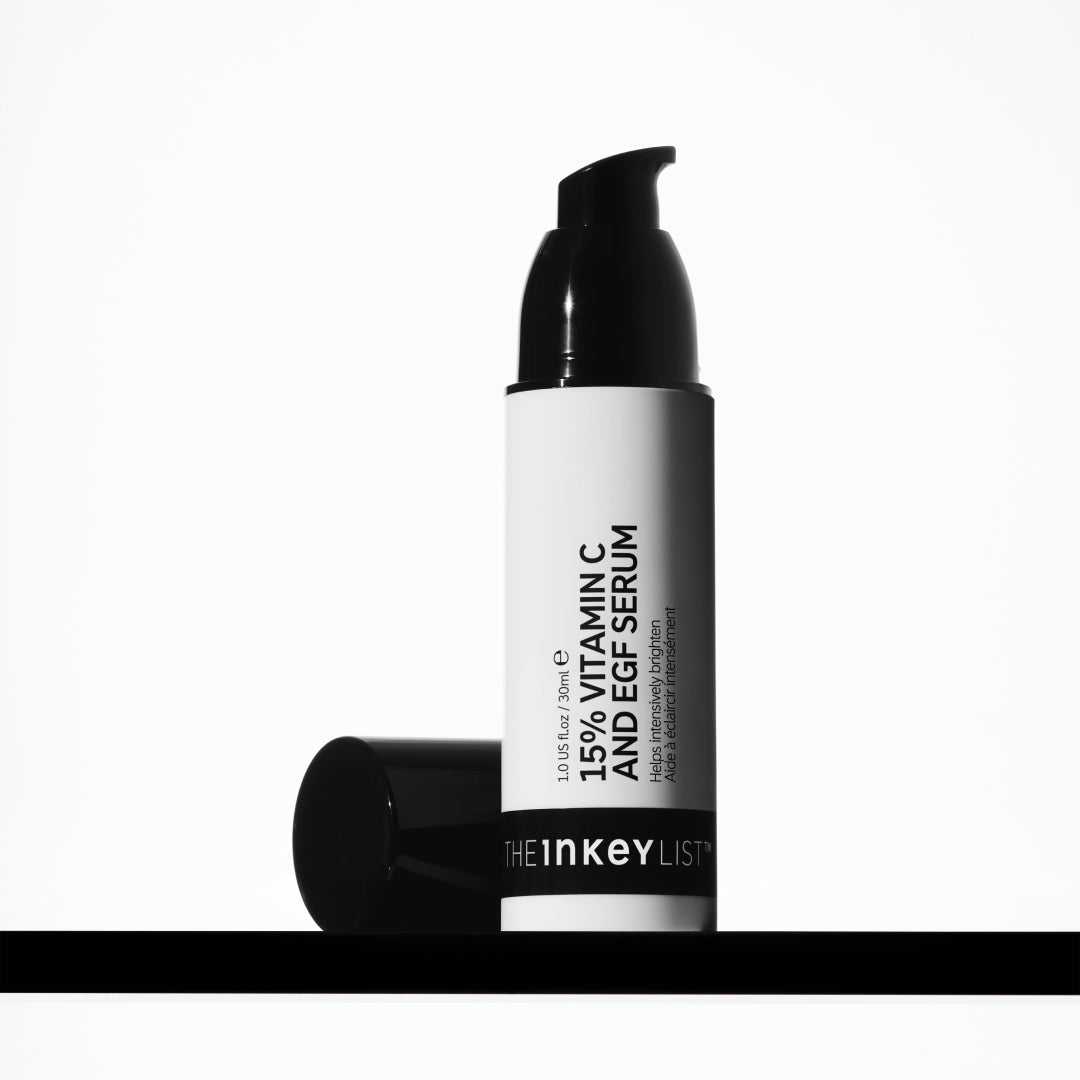
We see it a little differently, because not every vitamin C product is water-based. Several budget formulas solve the stability problem by leaving water out altogether. The Ordinary's Vitamin C Suspension 23% + HA Spheres 2% suspends ascorbic acid in a blend of squalane and other oils and silicones. The Inkey List's Vitamin C Serum is a four-ingredient formula of ascorbic acid in dimethicone and silicone elastomers. Neither contains ferulic acid, and in neither case is it needed to stop the vitamin C oxidising in the bottle. You lose the extra photoprotection shown in the C E ferulic studies, but you are not buying a product that degrades before you finish it.
Vitamin C derivatives are another case. Ascorbyl glucoside and sodium ascorbyl phosphate are far more stable than L-ascorbic acid and do not rely on ferulic acid to keep them intact.
The cautious default is simple. If you are choosing a water-based L-ascorbic acid serum, look for one with vitamin E and ferulic acid on the list, as that is the version the research supports. If you prefer an anhydrous formula or a derivative, ferulic acid is a bonus rather than a requirement. The vitamin C serums guide explains how to choose between the different forms.
Who Ferulic Acid Is For
Most people. The site's data lists ferulic acid as suitable for all skin types, including oily, acne-prone and sensitive skin, with low ratings for irritation, dryness, purging and clogged pores.
Anyone concerned with sun damage and photoageing. Antioxidant serums under sunscreen are the main use case. The vitamin C and SPF guide explains how the two layers work together.
Pigmentation and dullness. Ferulic acid itself has modest evidence here, but it supports vitamin C, which has better evidence for fading dark spots. The hyperpigmentation guide covers the full picture.
Pregnancy. The site's data rates ferulic acid as safe in pregnancy, with no known reproductive or developmental concerns. The pregnancy-safe skincare guide covers the rest of a routine. As always, check with your midwife, GP or pharmacist if you have any doubts.
Who should be careful. The site's data suggests avoiding ferulic acid if you know you react to phenols or cinnamic acid derivatives. Rare cases of contact sensitisation have been reported, so patch test if your skin is very reactive. In practice, irritation from a C E ferulic serum is far more likely to come from the low pH and high concentration of vitamin C than from the ferulic acid.
How to Use It
Use it in the morning. Antioxidants do their most useful work during the day, when skin is exposed to UV and pollution. Apply a vitamin C serum with ferulic acid after cleansing and before moisturiser and sunscreen.
Always follow with sunscreen. Ferulic acid adds to the protection your SPF gives; it does not replace it.
Store it well. Keep water-based vitamin C serums closed, out of light and away from heat. A light straw colour is normal. A dark orange or brown serum has oxidised and is past its best, ferulic acid or not.
Pair it freely. Ferulic acid has no known conflicts with other common actives. It can sit alongside niacinamide, hyaluronic acid and retinoids in the same routine, although many people keep vitamin C for the morning and retinol for the evening. The retinol and vitamin C guide and layering actives guide explain the order.
Products Worth Considering
The catalogue does not yet include a classic water-based C E ferulic serum, and only two products list a ferulic ingredient in their full ingredient lists. The products below are grounded in those lists.
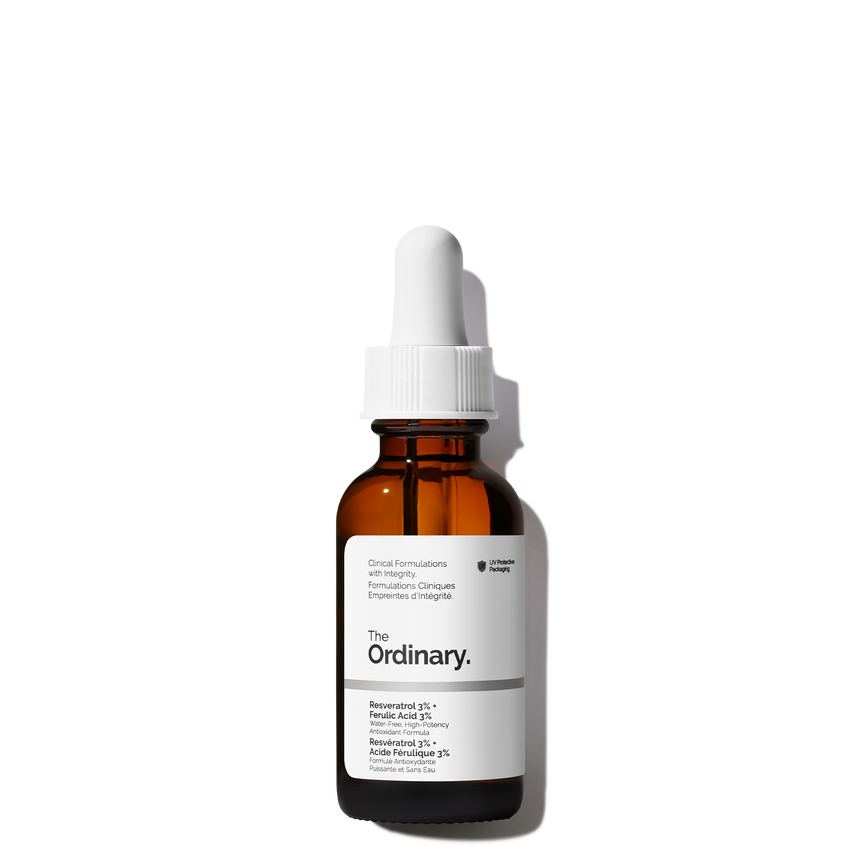
The Ordinary's Resveratrol 3% + Ferulic Acid 3% (around £9.90 for 30ml) is the only product in the catalogue built around ferulic acid. The formula is just three ingredients: propanediol, resveratrol and ferulic acid, with no vitamin C. At 3%, the ferulic acid is well above the 0.5% used in the Duke studies, so this is an antioxidant serum in its own right rather than a stabiliser. The site's data notes that resveratrol is unstable in light, so this suits evening use. Resveratrol is rated 'caution' in pregnancy in the site's data because of limited safety information, so check with a healthcare professional first if that applies to you.
The Inkey List's Retinol Eye Cream (around £13.00 for 15ml) includes ethyl ferulate and tocopherol near the end of its ingredient list. Here they play a supporting role, helping to protect the retinol, which is also sensitive to light and air.
If you want a vitamin C serum, The Ordinary's Vitamin C Suspension 23% + HA Spheres 2% (around £7.70 for 30ml) and The Inkey List's Vitamin C Serum (around £12.00 for 30ml) are the water-free options discussed above. Both use L-ascorbic acid at high strength, so start slowly if your skin is sensitive.
For a gentler budget option with the vitamin C and E pairing, The Inkey List's Vitamin B, C and E Moisturiser (around £9.00 for 50ml) contains sodium ascorbyl phosphate, ascorbyl palmitate and two forms of vitamin E alongside niacinamide and panthenol. It is a moisturiser rather than a targeted antioxidant serum, but it is an easy way to add antioxidants to a simple routine.
You can browse the wider serum range in the shop.
Common Mistakes
Treating ferulic acid as essential. It matters most in water-based L-ascorbic acid serums. In water-free formulas and derivative-based products it is a nice addition, not a deal-breaker.
Paying for the name rather than the formula. 'C E ferulic' on a label tells you little on its own. Check that L-ascorbic acid, tocopherol and ferulic acid are all on the ingredient list, and that the packaging is opaque and ideally airtight.
Using an oxidised serum. Ferulic acid slows oxidation; it does not stop it. If the serum has turned dark orange or brown, replace it.
Skipping sunscreen. The studies above measured how much extra protection an antioxidant serum adds. Even the best result is an extra layer under SPF, not a substitute for it.
Frequently Asked Questions
What does ferulic acid do for skin? It is an antioxidant that neutralises free radicals from UV light and pollution. In serums, it also helps stabilise vitamins C and E and appears to increase their protective effect.
Why is ferulic acid paired with vitamin C? Research from Duke University found that adding 0.5% ferulic acid to a serum of 15% vitamin C and 1% vitamin E made both vitamins more stable and roughly doubled the serum's protection against UV damage in pig skin.
Do I need ferulic acid in my vitamin C serum? Not always. It matters most in water-based L-ascorbic acid serums, which oxidise quickly. Water-free formulas and stable vitamin C derivatives do not depend on it.
Can I use ferulic acid with retinol? Yes. There is no known conflict. Many people use vitamin C and ferulic acid in the morning and retinol at night, simply because antioxidants are most useful during the day.
Can I use ferulic acid with niacinamide? Yes. The two can be used in the same routine. The niacinamide and vitamin C guide covers the older concerns about combining niacinamide with vitamin C.
Is ferulic acid safe during pregnancy? The site's data rates it as safe, with no known reproductive or developmental concerns. Check with your midwife, GP or pharmacist if you are unsure.
Does ferulic acid replace sunscreen? No. It absorbs a small amount of UV, but nowhere near enough to count as sun protection. Use it under a broad-spectrum SPF. See all products containing ferulic acid for the full range on the site.