Tranexamic acid is not better than vitamin C across the board, but for some kinds of dark spot it is the better choice. It works on a different part of the pigmentation process, it is one of the best-tolerated brighteners you can buy, and it has a particularly strong case for melasma and for the stubborn red-brown marks that linger after breakouts. Vitamin C, meanwhile, has the deeper research base, adds antioxidant protection against the sun damage that causes new spots, and does more for general dullness and sun spots. The useful question is not which one wins, but which one suits your pigmentation and your skin, and for many people the answer is to use both. This guide covers how tranexamic acid works, what the evidence shows, how it compares with vitamin C, and how to fit it into a routine.
What Tranexamic Acid Actually Is
Tranexamic acid is a synthetic derivative of the amino acid lysine. On an INCI list it appears simply as Tranexamic Acid, and you will often see it abbreviated to TXA on the front of the bottle. It began life as a medicine: taken as a tablet or given by injection, it reduces bleeding by stopping blood clots from breaking down too quickly, and it is still widely prescribed for heavy periods and used in surgery.
Its skincare career started by accident. Doctors prescribing it for unrelated reasons noticed that some patients' melasma faded, and dermatologists have since used it deliberately for pigmentation for decades, first orally and more recently in topical creams and serums. That history matters for two reasons. It means tranexamic acid has a longer track record in skin than its recent popularity suggests, and it means much of the most impressive evidence comes from tablets, not from the serums you can buy. We will come back to that distinction, because it is the one most product marketing quietly skips.
How It Works (and Why That Is Different from Vitamin C)
Most brightening ingredients, including vitamin C, alpha arbutin, azelaic acid and kojic acid, work by slowing tyrosinase, the enzyme inside melanocytes that turns the amino acid tyrosine into melanin. They act at the factory, reducing how much pigment gets made.
Tranexamic acid works further upstream, on the signals that tell the factory to start production in the first place. When skin is exposed to UV light, heat or inflammation, it activates an enzyme system called plasmin. Plasmin sets off a chain of messengers, including prostaglandins and a hormone called alpha-MSH, that switch melanocytes on. Tranexamic acid blocks the activation of plasmin, which quietens that chain and leaves melanocytes less stimulated. The site's tranexamic acid ingredient data summarises it as interrupting one of the signals that triggers melanin production, which is a fair one-line version.
There is a second effect that helps explain its reputation for melasma. Melasma patches tend to have more small blood vessels than the surrounding skin, and those vessels release growth factors that appear to feed the pigmentation. Tranexamic acid seems to dampen this vascular component as well, which is also why the site's data lists post-inflammatory erythema, the flat pink or red marks left after spots, among its suitable uses. Vitamin C does not do this.
The practical upshot is that the two ingredients are not competing for the same job. One reduces the instruction to make pigment; the other reduces the making of it. That is why they combine well, and why a formula containing both, which several do, is more than a marketing gimmick.
What the Evidence Shows
The strongest evidence for tranexamic acid is for melasma, and most of it is for oral tranexamic acid. Low-dose tablets, prescribed by a dermatologist, have produced consistent and sometimes substantial improvement in melasma in controlled trials, often within two to three months. That is a prescription treatment with medical screening, because a drug that affects clotting is not suitable for everyone, and it is not what you are buying in a serum.
Topical tranexamic acid has a smaller and less polished evidence base. Several small trials have found that tranexamic acid creams or solutions at around 2 to 5% improve melasma over eight to twelve weeks, and a few have found results broadly comparable to hydroquinone, the long-standing prescription treatment, with noticeably fewer side effects. The trials are generally short, involve modest numbers of people, and vary in how the tranexamic acid was delivered, including some that used microneedling or injections alongside it. The fair reading is that topical tranexamic acid does something useful for melasma, it is not just a borrowed reputation, but the size of the effect in an ordinary serum is less certain than the oral results suggest.
For other kinds of pigmentation, such as post-inflammatory marks and general uneven tone, the evidence is thinner again, though the mechanism makes sense and the risk is low. Many of the products on sale combine tranexamic acid with niacinamide, vitamin C derivatives or other brighteners, which is good formulation practice but makes it harder to say how much of any result is down to tranexamic acid alone.
Where We Differ: The 'Better Than Vitamin C' Claim
You have probably seen tranexamic acid described online as the new vitamin C, or as the brightener that finally works when vitamin C has not. It is easy to see where that comes from. Vitamin C is notoriously fussy: the most researched form, L-ascorbic acid, oxidises, often needs a low pH that stings, and plenty of people have bought a serum that turned orange in the bottle and did very little. Tranexamic acid, by contrast, is stable, gentle and fuss-free, and its melasma results are real.
Where we see it differently is on what the comparison actually supports. There are very few direct head-to-head studies of topical tranexamic acid against topical vitamin C, so any claim that one is simply 'better' runs ahead of the evidence. Vitamin C has decades of research behind it for brightening, antioxidant protection and collagen support; tranexamic acid has a narrower but more targeted case. On the specific question most people are asking, which will fade my dark spots faster, the honest answer is that it depends on what kind of dark spots you have.
Our position is that tranexamic acid is the better first choice for melasma, for pigmentation that flares with heat or hormones, for red or pink post-acne marks, and for sensitive skin that cannot tolerate vitamin C. Vitamin C remains the better first choice for sun spots, general dullness and anyone who also wants antioxidant and anti-ageing benefits from the same product. If your skin tolerates vitamin C well and your pigmentation is mainly sun-related, there is no strong reason to switch.
Tranexamic acid and vitamin C work at different points in the same process. Choosing between them is less useful than knowing which problem each one solves.
Tranexamic Acid vs Vitamin C, Side by Side
On mechanism, vitamin C inhibits tyrosinase and neutralises the free radicals generated by UV and pollution, which helps prevent new pigment as well as fading existing marks. Tranexamic acid reduces the inflammatory and vascular signals that switch melanocytes on. The vitamin C serums guide covers the different forms of vitamin C in detail.
On tolerability, tranexamic acid wins comfortably. The site's data rates its irritation, dryness, purging and comedogenic risks all as low, and it does not cause sun sensitivity. L-ascorbic acid at effective strengths often tingles or stings and can be too much for sensitive or rosacea-prone skin, though gentler derivatives such as ascorbyl glucoside close much of that gap at the cost of some potency.
On stability, tranexamic acid is again the easier ingredient. It does not oxidise in the bottle, it is not sensitive to light in the way pure vitamin C is, and it works across a normal skin-friendly pH range. Vitamin C serums need careful packaging and have a shorter useful life once opened.
On breadth of benefit, vitamin C wins. Beyond brightening, it supports collagen production and adds a layer of antioxidant defence under sunscreen. Tranexamic acid is a specialist: it is very good at one job and does not claim to do much else.
On evidence, vitamin C has the larger and longer research base overall, while tranexamic acid has the more specific case for melasma. Neither has the kind of large head-to-head trial that would settle the question outright.
Who Tranexamic Acid Is For
Melasma is the clearest case. If you have symmetrical brown patches on the cheeks, forehead or upper lip that darken in summer, in heat, or with hormonal changes, tranexamic acid is one of the most sensible over-the-counter ingredients to try. Melasma is stubborn and recurs easily, so it is worth seeing a dermatologist if it is extensive, but a topical tranexamic acid serum alongside rigorous sun protection is a reasonable place to start.
Lingering marks after acne are the second. Post-inflammatory hyperpigmentation (brown marks) and post-inflammatory erythema (pink or red marks) often appear together, especially in the months after a breakout clears. Tranexamic acid is one of the few brighteners with a plausible effect on both, and its non-comedogenic rating means acne-prone skin can use it without worry. If the redness is part of an ongoing condition rather than a healing mark, the rosacea ingredients guide is the better starting point.
Sensitive skin is the third. If vitamin C has stung, azelaic acid has itched or acids have left you red, tranexamic acid is likely to be tolerated where those were not. Along with alpha arbutin, it is one of the two gentlest brightening actives, and the alpha arbutin guide covers how the two compare.
Medium and darker skin tones are the fourth. Pigmentation on deeper skin is more likely to be triggered by inflammation, including inflammation caused by the treatment itself. A brightener that works by calming inflammatory signals rather than by exfoliating fits that situation well.
Who will likely be underwhelmed: anyone expecting a serum to match the results of prescription tablets, and anyone hoping it will fade long-standing sun spots on its own. Sun spots, or solar lentigines, are a build-up of pigment from years of UV exposure, and they tend to respond better to tyrosinase inhibitors, exfoliation and retinoids than to tranexamic acid alone.
How to Use Tranexamic Acid
Most tranexamic acid products are serums, applied to clean skin before moisturiser. It can be used morning or evening, or both, and twice daily is a sensible default if the product is comfortable. The site's data notes that most over-the-counter products sit at 2 to 5%, with around 3% the most common, which matches the range used in most topical studies. There is no good evidence that pushing above that range in a home product brings faster results.
Apply it across the whole affected area rather than dabbing it onto individual spots. Melasma in particular is usually more widespread than the visible patches suggest, and treating the whole area avoids uneven, halo-like results.
Give it eight to twelve weeks before judging it, and take photos in consistent light at the start. Like every brightener, tranexamic acid reduces new pigment rather than erasing what is already there, so it depends on the skin shedding pigmented cells over successive cycles.
Sunscreen is not optional. Tranexamic acid does not make skin more sensitive to the sun, but UV and visible light are the main triggers for melasma and new dark spots, and a brightening routine without daily SPF will struggle to get anywhere. For melasma specifically, a tinted sunscreen adds protection against visible light, which ordinary untinted filters largely let through. The vitamin C and SPF guide covers how to layer brighteners under sunscreen.
What to Pair It With
Tranexamic acid combines well with almost everything, because it is not acidic, not exfoliating and not reactive. The most natural partner is vitamin C in the morning, where the two cover different stages of pigmentation and vitamin C adds antioxidant protection under SPF. If you want to keep things simple, a single serum containing both does the job.
Niacinamide is the other obvious pairing. It reduces how much pigment is transferred from melanocytes to the surrounding skin cells, a third mechanism alongside tranexamic acid's signalling effect and vitamin C's enzyme effect, and it is gentle enough to use daily. It is one of the most common partners in tranexamic acid formulas for exactly this reason. The niacinamide and vitamin C guide explains why the old warning about combining those two no longer holds.
Azelaic acid plus tranexamic acid is one of the stronger non-prescription combinations for melasma, as the hyperpigmentation ingredients guide explains. Retinoids such as retinal can be added in the evening for long-term maintenance and texture, though they need introducing slowly, as early irritation can briefly worsen melasma. Exfoliating acids are fine to use alongside it on separate nights. The layering actives guide covers the general order of application.
Tranexamic Acid During Pregnancy
The site's ingredient data places tranexamic acid in the 'caution' category for pregnancy. Absorption from a topical serum is low and it is not considered high-risk at cosmetic strengths, but there is little data specific to topical use in pregnancy, and as a medicine it is not routinely recommended during pregnancy without medical supervision. That makes the cautious approach the sensible default.
This matters because melasma often appears or worsens in pregnancy, and many people look for a brightener at precisely this time. Azelaic acid has more established safety data and is the usual first choice, alongside niacinamide and daily sunscreen. The pregnancy-safe skincare guide covers the wider picture, and any routine during pregnancy is worth checking with your GP, midwife or dermatologist.
The same caution applies more strongly to oral tranexamic acid, which is a prescription medicine with its own contraindications, including a history of blood clots. It is not something to source online or take for skin without a doctor's assessment.
Products Worth Considering
The most balanced starting point is The Inkey List's Tranexamic Acid Serum (around £16.00 for 30ml). It combines 2% tranexamic acid with 2% of a vitamin C derivative, ascorbyl glucoside, so it covers both mechanisms in one gentle, fragrance-free serum. For anyone weighing up tranexamic acid against vitamin C, it neatly sidesteps the choice. Naturium's Tranexamic Topical Acid 5% sits at the top of the typical over-the-counter range, for those who want a stronger single-active serum.
If you want niacinamide in the same step, Medicube's TXA Niacinamide Serum (around £22.00 for 30ml) pairs the two. Purito's TXA 6 Niacinamide 10 Retinal Serum (around £28.00) adds retinal, a retinoid, which makes it an evening product suited to people already used to retinoids, and one to avoid during pregnancy.
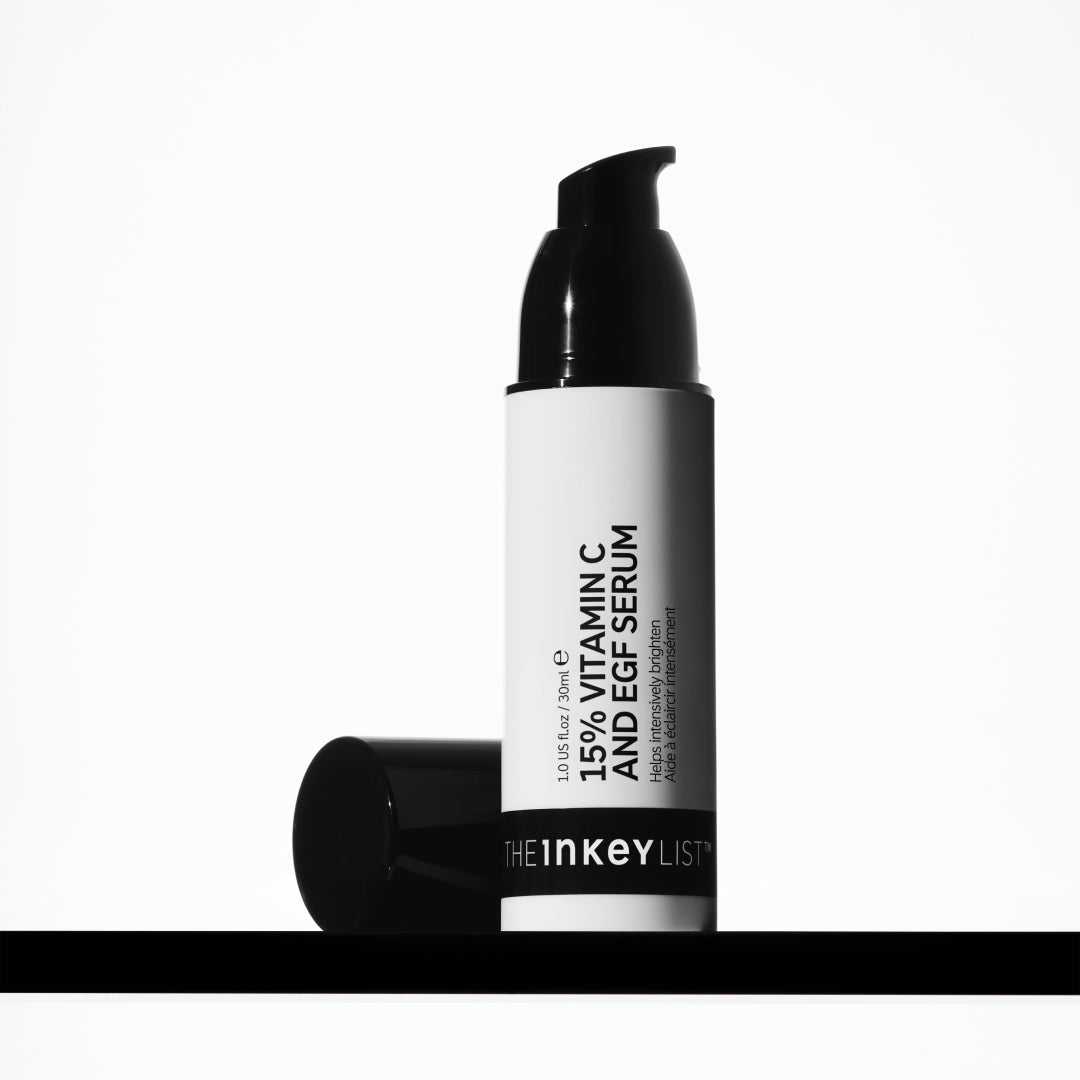
On the vitamin C side, The Ordinary's Vitamin C Suspension 23% + HA Spheres 2% (around £7.70) is a potent, low-cost L-ascorbic acid option for skin that tolerates it, though it can tingle. The Inkey List's 15% Vitamin C and EGF Serum (around £15.00) uses the gentler ascorbyl glucoside instead. To add a third mechanism cheaply, The Ordinary's Alpha Arbutin 2% + HA (around £10.50) layers well with any of the above.
Whichever you choose, the sunscreen does the heaviest lifting. Purito's Daily Soft Touch Sunscreen SPF50+ (around £16.00) is light enough to wear every day over serums. You can compare the wider serum and SPF ranges in the shop.
What to be wary of: products that put 'TXA' prominently on the front but list tranexamic acid near the bottom of the ingredient list, and marketing that borrows results from oral tranexamic acid trials to sell a serum. As ever, the ingredient list tells you more than the label.
Common Mistakes
Expecting tablet results from a serum. The most dramatic melasma improvements come from prescription oral tranexamic acid. A topical serum is gentler and safer, but slower and more modest.
Giving up too soon. Most people judge a brightener after a month, before the skin has had time to replace its pigmented cells. Commit to at least eight weeks.
Skipping sunscreen, or using it only on sunny days. UV and visible light trigger new pigment year-round, and melasma in particular can darken after brief, everyday exposure.
Treating every dark spot the same way. Sun spots, melasma and post-acne marks have different causes, and the best ingredient depends on which one you have.
Abandoning vitamin C because tranexamic acid is newer. If vitamin C suits your skin, it is still doing useful work that tranexamic acid does not do. Adding one does not mean dropping the other.
Frequently Asked Questions
Is tranexamic acid better than vitamin C for dark spots? Not universally. Tranexamic acid is the better choice for melasma, red or pink post-acne marks and sensitive skin; vitamin C is better for sun spots, dullness and antioxidant protection. Because they work by different mechanisms, many routines use both.
Can I use tranexamic acid and vitamin C together? Yes. They work at different stages of pigmentation and do not interfere with each other. Several serums, including The Inkey List's Tranexamic Acid Serum, already combine the two. If you use separate products, apply the thinner, more watery one first.
How long does tranexamic acid take to work? Expect eight to twelve weeks before judging results. Melasma can take longer, and needs consistent daily sunscreen throughout.
What percentage of tranexamic acid should I look for? Most over-the-counter serums contain 2 to 5%, with around 3% the most common. That is the range used in most topical studies, and there is no good evidence that higher strengths in home products work better.
Is tranexamic acid safe for sensitive skin? Generally yes. It is one of the best-tolerated brightening actives, with low irritation, dryness and purging risk, and it does not increase sun sensitivity. Patch test as you would with any new product.
Does tranexamic acid work for acne scars? It can help with the flat brown and red marks left after breakouts, which are not true scars. It does not improve indented or raised scarring, which needs different treatments.
Can I use tranexamic acid with retinol? Yes. Tranexamic acid is not irritating and does not exfoliate, so it sits comfortably alongside retinoids. Introduce the retinoid gradually, as early irritation can briefly make pigmentation worse.
Is tranexamic acid safe in pregnancy? It sits in the caution category. Topical absorption is low, but pregnancy-specific data is limited, so most people choose azelaic acid instead and check with a healthcare professional. See all products containing tranexamic acid for the full range on the site.