The best skincare ingredients for rosacea are fewer and gentler than most routines assume. Azelaic acid is the one active with strong clinical evidence for rosacea bumps and redness, and it is available over the counter at 10%. Around it, the useful ingredients are the ones that support a fragile barrier and calm inflammation: ceramides, glycerin, panthenol, niacinamide at modest strengths, and soothing botanicals such as centella and liquorice root. Just as important is what you leave out. Alcohol, fragrance, menthol, witch hazel, scrubs and strong acids are among the most commonly reported rosacea triggers, and a single product containing one of them can undo weeks of careful care. Daily sunscreen matters more than any serum. This guide explains why rosacea needs a different approach from ordinary 'sensitive skin', which ingredients have evidence behind them, which to avoid, and when skincare stops being enough and a GP or dermatologist should take over.
A Quick Note Before We Start
Rosacea is a diagnosed medical condition, not a skin type. This guide covers cosmetic skincare that can support rosacea-prone skin, but it is not a substitute for medical advice. If you have persistent facial redness, flushing, bumps that look like acne, visible blood vessels or gritty, irritated eyes, it is worth seeing a GP or dermatologist for a proper diagnosis. Several of the most effective rosacea treatments, including higher-strength azelaic acid, ivermectin and metronidazole creams, oral antibiotics and laser treatment, are prescription-only and sit outside anything you can buy from the shop.
What Rosacea Actually Is
Rosacea is a chronic inflammatory condition that affects the central face: the cheeks, nose, chin and forehead. Dermatologists now describe it by its features rather than by rigid subtypes. The most common are persistent redness, flushing that comes and goes, small red bumps and pus-filled spots (often mistaken for acne, but without blackheads), visible broken capillaries, and in some people thickened skin on the nose or irritation of the eyes. Most people have a mix of these, and the mix can change over time.
The causes are still being worked out, but several pieces are well established. The skin's innate immune system is overactive, producing more of an inflammatory peptide called cathelicidin and more of the enzyme that activates it. Blood vessels in the face dilate too easily and too often. The skin barrier is measurably weaker than normal, losing more water and letting irritants in more readily. And many people with rosacea carry higher numbers of Demodex mites, tiny organisms that live in hair follicles on everyone's face, which seem to feed the inflammation.
That combination explains why rosacea skin behaves the way it does. Heat, sunlight, alcohol, spicy food, hot drinks, exercise, stress and wind all dilate blood vessels or provoke the immune response. A weakened barrier means products sting more easily. And an already-inflamed immune system means that ingredients most people tolerate without a second thought can tip the skin into a flare.
Where We Differ: Rosacea Is Not Just 'Sensitive Skin'
Most advice treats rosacea as an extreme version of sensitive skin, and stops there: use gentle products, avoid actives, done. It is easy to see why. Rosacea skin is sensitive, and the gentle routine in our sensitive skin ingredients guide is a good foundation for it.
Where we see it differently is in two places. First, avoiding all actives goes too far. Rosacea has one cosmetic active with genuinely strong evidence behind it, azelaic acid, and leaving it out of the routine because 'actives irritate' means missing the single ingredient most likely to reduce bumps and redness. Second, gentle is not enough on its own. Ordinary sensitive skin is usually a barrier problem that resolves once the barrier is repaired. Rosacea is an inflammatory and vascular condition that keeps going even with a perfect barrier, which is why trigger management and sun protection matter as much as the products themselves, and why skincare alone often is not the whole answer.
The practical upshot is a routine that is minimal in number but deliberate in choice: a gentle cleanser, a barrier-supporting moisturiser, daily SPF, and one well-chosen active. Everything else is optional, and every new addition is a potential trigger.
Rosacea skin needs fewer products, not no actives. The aim is one evidence-backed treatment surrounded by a routine that gives the skin nothing to react to.
The Ingredient With the Strongest Evidence: Azelaic Acid
Azelaic acid is the standout. At 15%, as a prescription gel, it is a licensed first-line treatment for the bumps and spots of papulopustular rosacea, with several large clinical trials behind it. It works on rosacea through more than one route: it reduces the overactive cathelicidin pathway, calms inflammation, has antibacterial activity and acts as an antioxidant. Its evidence for persistent background redness is more modest than for bumps, but many people see an improvement in overall tone as the inflammation settles.
Over-the-counter azelaic acid in the UK typically comes at 10%. That is below the prescription strength, and it has not been through the same trials, but it uses the same molecule and many dermatologists suggest it as a reasonable starting point for mild rosacea. The site's ingredient data lists rosacea-prone skin among its suitable uses, rates its irritation risk as low and its pregnancy risk as safe, which makes it unusually versatile for an active.
The catch is the first few weeks. Azelaic acid commonly causes tingling, itching or a mild burning sensation when you start, and on rosacea skin that can feel like a flare. It usually settles within two to four weeks. The way through is to start every other evening, apply it over moisturiser if it stings on bare skin, and build to daily use as your skin adjusts. Results take time: expect around eight to twelve weeks before judging it. The azelaic acid deep dive covers formulation differences and how to use it alongside other ingredients.
Barrier Support: Ceramides, Glycerin and Panthenol
Because the rosacea barrier is weaker than normal, the foundation of any routine is a moisturiser that helps repair it. This is less exciting than an active, but studies of rosacea skin consistently find that good barrier care reduces stinging and makes treatments easier to tolerate.
Ceramides are the lipids that hold the outer layer of skin together, and a moisturiser that combines them with cholesterol and fatty acids mimics the skin's own barrier mix. Glycerin is the workhorse humectant, drawing water into the skin, and it is in almost every good moisturiser for a reason. Panthenol, or pro-vitamin B5, adds hydration and supports barrier repair, and the site's data rates it low risk across every category. Squalane is a light, stable emollient that rarely irritates and suits rosacea skin that is also oily. The ceramides guide explains how barrier lipids work in more detail.
What matters most is not any single one of these but the overall formula: fragrance-free, alcohol-free, without essential oils, and rich enough to leave the skin comfortable rather than tight. A short ingredient list is a reasonable proxy for a gentle one.
Niacinamide: Helpful, but Keep the Strength Modest
Niacinamide has a good case for rosacea. It increases the skin's own production of ceramides, strengthens the barrier, reduces water loss and has anti-inflammatory effects. A frequently cited study found that a niacinamide moisturiser improved barrier function and reduced redness in people with rosacea over four weeks.
The caveat is concentration. The 10% serums that dominate the shelf were developed largely for oily and acne-prone skin, and the site's ingredient data specifically advises caution above 5% on highly reactive or rosacea-prone skin. Some people with rosacea find that higher strengths cause flushing or stinging. A moisturiser or serum at 2 to 5% delivers most of the barrier benefit with less risk. The niacinamide guide covers its other benefits.
Soothing Botanicals: Centella, Liquorice and Friends
A handful of plant-derived and plant-identical ingredients have reasonable evidence for calming redness. They are supporting players rather than treatments, but they are useful in a moisturiser or serum.
Centella asiatica and its purified active, madecassoside, are anti-inflammatory and support barrier repair. Most of the evidence comes from laboratory work and small studies, but centella is well tolerated and features in many products designed for redness. The centella guide covers what it can and cannot do. One caution from the site's data: people allergic to plants in the carrot family should patch test first.
Liquorice root extract contains compounds that calm inflammation, and one of them, licochalcone A, has been studied specifically in products for redness-prone skin. The site's data lists rosacea among its suitable uses. Beta-glucan, usually derived from oats or yeast, is a soothing humectant also flagged as suitable for rosacea-prone skin, as is bisabolol, the calming compound found in chamomile (patch test if you react to chamomile or ragweed). Allantoin is another gentle soother that turns up in many formulas for irritated skin.
None of these will clear rosacea on their own. Their value is in making the moisturiser you use every day work a little harder at calming the skin, without adding risk.
Sunscreen: The Non-Negotiable
Sunlight is the single most commonly reported rosacea trigger, and UV exposure drives both flares and the long-term vessel damage behind persistent redness. Daily broad-spectrum SPF 30 or higher is not optional for rosacea skin. It is the one step every dermatologist agrees on.
The traditional advice is to choose a mineral sunscreen based on zinc oxide or titanium dioxide, because these filters sit on the skin, rarely sting and are less likely to cause reactions than some older chemical filters. Zinc oxide also has mild soothing properties, and a slight white or green tint can help neutralise visible redness. That advice is still a sensible default if you have found chemical sunscreens irritating.
It is not an absolute rule, though. Many people with rosacea tolerate modern chemical-filter sunscreens perfectly well, and a sunscreen you are happy to wear generously every day protects you more than a mineral one you skimp on because it feels heavy or leaves a cast. The non-negotiables are that it is fragrance-free and alcohol-free (or very low in alcohol), and that you use enough of it. The vitamin C and SPF guide explains how to layer serums under sunscreen.
Ingredients to Approach With Care
Some ingredients are not off limits for everyone with rosacea, but they are worth introducing slowly and only once the basics are stable.
Exfoliating acids are the obvious example. The site's ingredient data lists rosacea under 'avoid if' for glycolic acid and advises caution for salicylic acid. Small molecules, low pH and active exfoliation are a hard combination for an inflamed barrier. If you want gentle exfoliation, a polyhydroxy acid such as gluconolactone is the better fit: it is larger, works more slowly, and the site's data flags it as suitable for rosacea-prone skin. Use it a couple of times a week at most.
Retinoids are similar. The site's data lists rosacea among the conditions to avoid retinol without medical guidance, because retinoids commonly cause redness and peeling as the skin adjusts. Some dermatologists do use low-strength retinoids in rosacea once inflammation is controlled, but that is a decision to make with professional input rather than an experiment to start alone. If you do use one, the azelaic acid and retinol guide covers how to combine them carefully.
L-ascorbic acid, the pure form of vitamin C, is usually formulated at a low pH and often stings rosacea skin. Gentler derivatives are better tolerated if you want antioxidant support. Sulfur has a long history in rosacea treatment for its antimicrobial effects, but the site rates its irritation risk as medium and lists sensitive and very dry skin among those who should avoid it, so it suits oilier rosacea with bumps rather than dry, reactive skin.
Ingredients That Commonly Trigger Flares
Surveys of people with rosacea have consistently found the same few ingredients at the top of the list of products that cause burning, stinging or flares. These are worth avoiding entirely rather than testing.
Alcohol, listed as Alcohol or Alcohol Denat. near the top of an ingredient list, dries and irritates the skin. The site's data lists rosacea explicitly under its 'avoid if' field. This applies to drying alcohols only; fatty alcohols such as cetyl and cetearyl alcohol are emollients and are fine.
Fragrance and essential oils are the next big group. 'Parfum' and the allergens that appear alongside it (linalool, limonene, geraniol, citronellol) are common sensitisers, and essential oils such as peppermint, eucalyptus, tea tree and citrus add both fragrance and irritation. Menthol and camphor create a cooling or tingling sensation that, on rosacea skin, frequently turns into a burning one. The fragrance-free skincare guide explains how to spot hidden fragrance on a label.
Witch hazel is another frequent offender, partly because many witch hazel toners are distilled with alcohol and partly because the plant's tannins are astringent. Physical scrubs, cleansing brushes and harsh foaming cleansers containing sodium lauryl sulfate are best left out altogether, since friction and stripping are exactly what a weak barrier does not need.
One more point is easy to miss: a product marketed for redness is not automatically free of these. In the site's catalogue, Cetaphil's PRO Redness Prone Skin Cleansing Facial Wash lists parfum along with linalool, geraniol and citronellol in its ingredient list. It may well suit plenty of people, but if fragrance is one of your triggers, the label on the front will not tell you. The ingredient list on the back will.
The front of the pack tells you who the product is marketed to. The ingredient list tells you whether your skin will agree.
A Simple Rosacea-Friendly Routine
In the morning, rinse with lukewarm water or use a gentle, non-foaming cleanser, apply a fragrance-free moisturiser, and finish with SPF 30 or higher. If you use azelaic acid twice daily, it goes on after cleansing and before moisturiser.
In the evening, cleanse gently to remove sunscreen, apply azelaic acid (every other night to start, building to nightly), then moisturiser. If azelaic acid stings on bare skin, apply moisturiser first and azelaic acid on top.
That is the whole routine, and for many people it is enough. If you want to add something, add one product at a time, wait at least two weeks before adding another, and patch test first on a small area along the jaw. The sensitive skin routine guide has more detail on cleansers and patch testing, and the layering actives guide covers the order of application.
Lifestyle triggers matter as much as products. Keep a simple diary for a few weeks, noting flares alongside heat, sun, alcohol, spicy food, hot drinks and stress. Most people find two or three personal triggers that account for most of their flares, and avoiding those does more than any serum.
Products Worth Considering
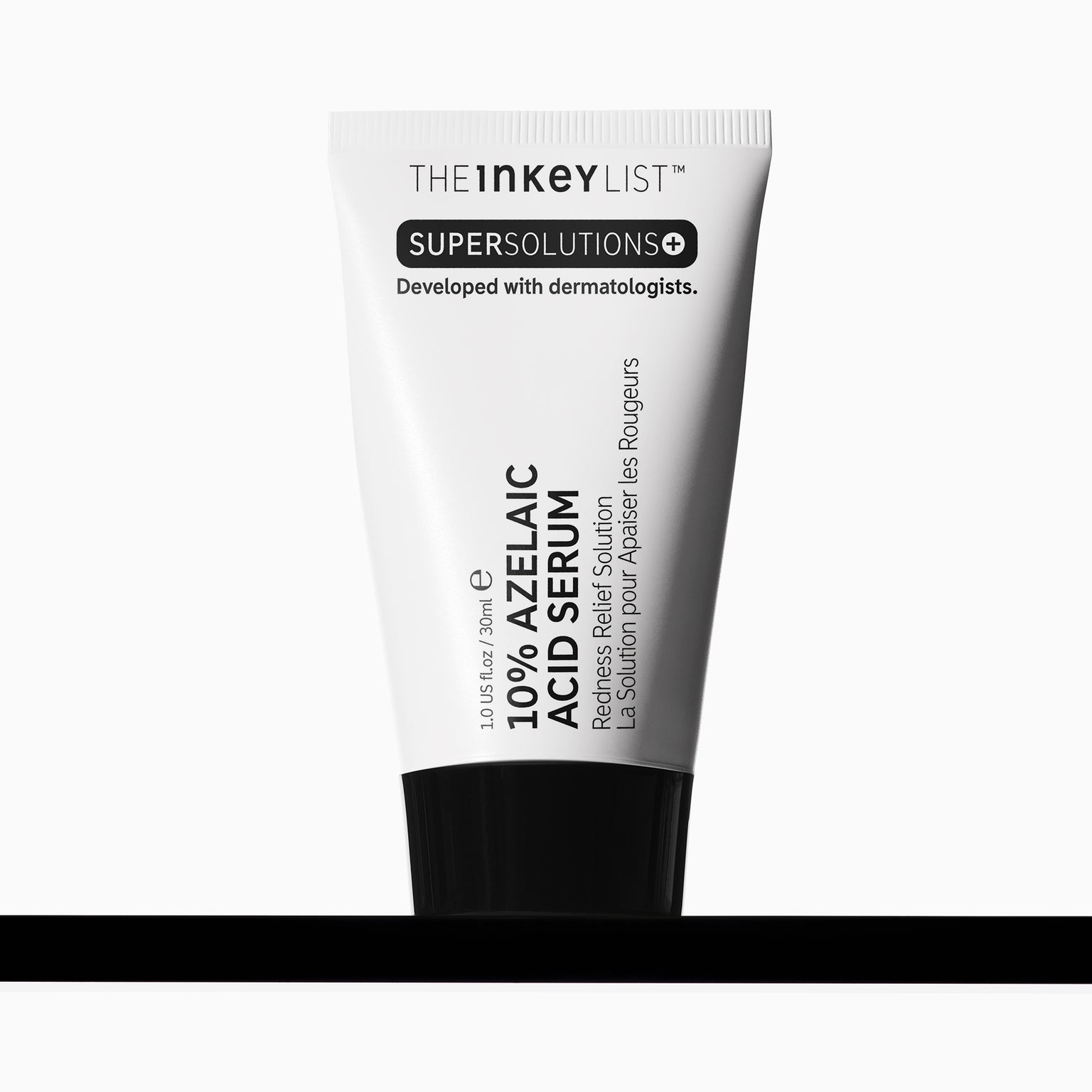
For azelaic acid, The Inkey List's 10% Azelaic Acid Serum for Redness Relief (around £16.00 for 30ml) is the clearest choice in the catalogue. It pairs 10% azelaic acid with 0.3% allantoin in a fragrance-free, essential-oil-free gel with a short ingredient list. The Ordinary's Azelaic Acid Suspension 10% is the other well-known option; its silicone-rich cream texture can feel slightly gritty but is fragrance-free and works well under moisturiser. Naturium's Azelaic Acid Emulsion 10% (around £22.00) is a lighter emulsion if you prefer that feel. One to approach with caution: azelaic acid serums that combine it with tea tree oil, which can irritate rosacea skin.
For moisturiser, The Inkey List's Bio-Active Ceramide Moisturiser (around £19.00) is fragrance-free and built around ceramides, glycerin and shea butter. The Ordinary's Natural Moisturizing Factors + PhytoCeramides (around £9.60) is a budget option with plant-derived ceramides and humectants. Purito's Wonder Releaf Centella Cream Unscented (around £20.00) adds centella; choose the unscented version specifically. For niacinamide at a rosacea-friendly strength, The Ordinary's Niacinamide 5% Face and Body Emulsion (around £11.70 for 100ml) sits at the 5% ceiling the site's data suggests for reactive skin.
For cleansing, The Inkey List's Milk Cleanser (around £13.00) and The Ordinary's Glycolipid Cream Cleanser (around £11.10) are both non-foaming and fragrance-free.
For sunscreen, the catalogue does not currently carry a mineral-filter facial SPF, so if you already know chemical filters sting, look further afield for a fragrance-free zinc oxide formula. If you tolerate chemical filters, The Inkey List's Dewy Sunscreen SPF 30 (around £15.00) is fragrance-free, and The Ordinary's UV Filters SPF 45 Serum (around £15.80) is a light, fragrance-free option that sits easily over azelaic acid. Patch test either before using it all over.
You can browse the wider serum, moisturiser, cleanser and SPF ranges in the shop, and filter by ingredient to check a formula before you buy.
When to See a GP or Dermatologist
Skincare can make rosacea calmer and more comfortable, but it cannot treat every feature of the condition. See a GP or dermatologist if your symptoms are not improving after two to three months of a gentle routine, if bumps and spots are widespread, if your eyes are gritty, dry or sore (ocular rosacea needs treatment), if the skin on your nose is thickening, or if redness is significantly affecting your confidence.
Prescription options are effective and varied: azelaic acid 15% gel, ivermectin and metronidazole creams, gels that temporarily constrict blood vessels to reduce redness, low-dose oral antibiotics for inflammation, and laser or light treatments for visible vessels and persistent redness. One thing to avoid is using hydrocortisone or other steroid creams on facial rosacea without medical advice: they can calm redness briefly but tend to make rosacea worse over time. If you are pregnant, the pregnancy-safe skincare guide covers which ingredients are generally considered fine; azelaic acid is among the usual first choices, but any treatment plan during pregnancy is worth running past your GP or midwife.
Frequently Asked Questions
What is the best ingredient for rosacea? Azelaic acid has the strongest evidence of any ingredient available in cosmetics. At 15% it is a licensed prescription treatment for rosacea bumps and spots, and 10% over-the-counter versions are a reasonable starting point for mild symptoms. It works best alongside a gentle, fragrance-free routine and daily sunscreen.
Is niacinamide good for rosacea? Usually, at modest strengths. Niacinamide strengthens the skin barrier and reduces inflammation, and studies have shown benefits for rosacea skin. Stick to 5% or less, since higher concentrations can cause flushing or stinging in some reactive skin.
Can I use retinol if I have rosacea? Retinoids often irritate rosacea skin, and the site's ingredient data advises avoiding retinol on rosacea without medical guidance. Some dermatologists do prescribe low-strength retinoids once inflammation is controlled, so discuss it with a professional rather than starting alone.
Is mineral or chemical sunscreen better for rosacea? Mineral sunscreens based on zinc oxide or titanium dioxide are the traditional recommendation because they are less likely to sting. But many people with rosacea tolerate modern chemical sunscreens well. The best sunscreen is a fragrance-free one you will wear every day in the right amount.
What skincare ingredients make rosacea worse? The most commonly reported triggers are drying alcohol, fragrance, essential oils, menthol, camphor, witch hazel, physical scrubs and harsh foaming cleansers. Strong exfoliating acids such as glycolic acid, and retinoids, can also worsen rosacea if introduced too quickly.
Can I exfoliate rosacea skin? Gently and rarely, if at all. Avoid scrubs and strong AHAs. A polyhydroxy acid such as gluconolactone, used once or twice a week, is the gentlest chemical option. Azelaic acid also has a mild smoothing effect, which is often enough on its own.
Is centella good for rosacea? Centella and its active compound madecassoside are anti-inflammatory and well tolerated, which makes them useful in moisturisers for redness-prone skin. They are supporting ingredients rather than treatments, so they will not clear rosacea on their own.
How long does it take for azelaic acid to work on rosacea? Expect around eight to twelve weeks of consistent use before judging results. Some tingling or itching in the first two to four weeks is common and usually settles. See all products containing azelaic acid for the full range on the site.