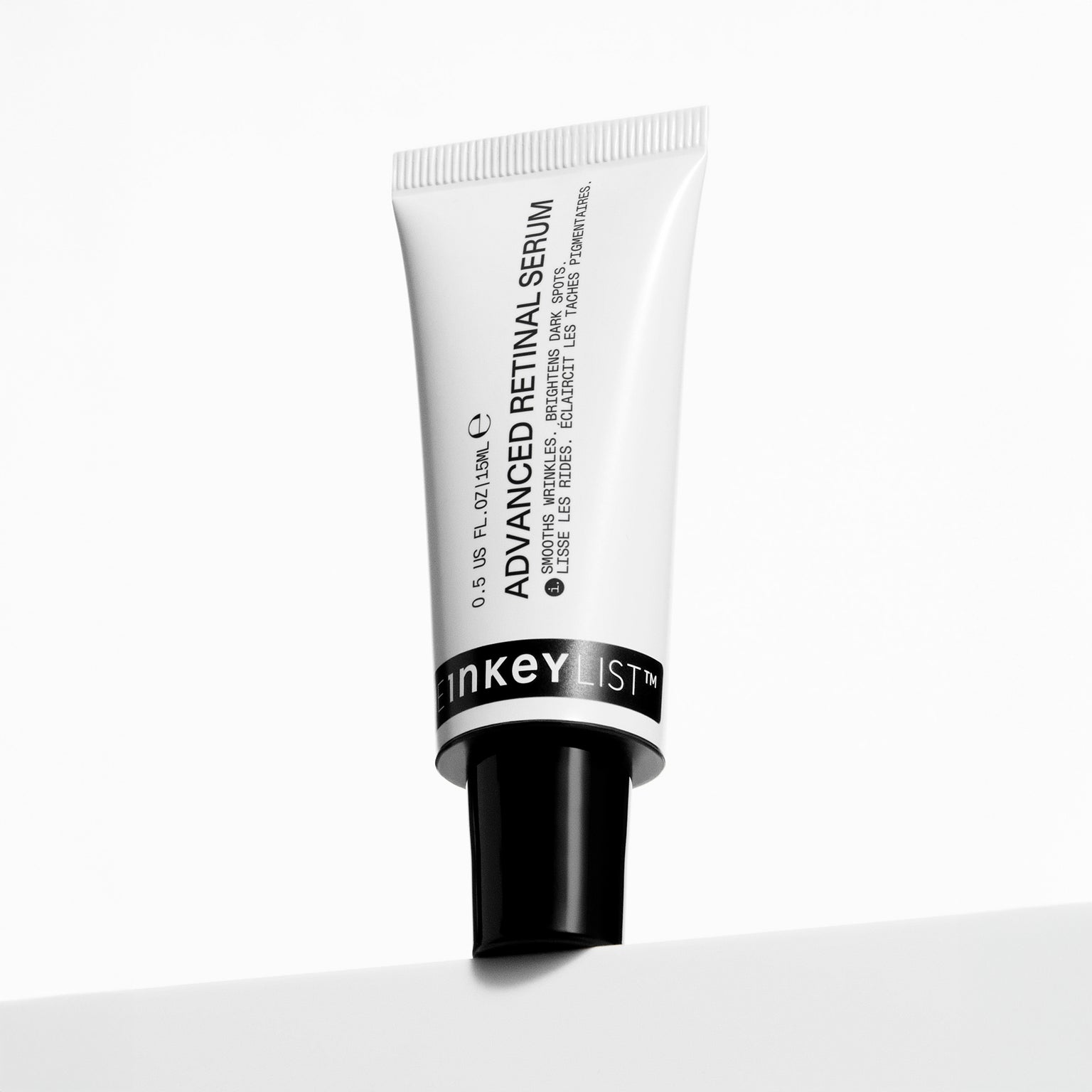
The best anti-ageing ingredients for your 30s are a broad-spectrum SPF worn every day, a retinoid at night and an antioxidant such as vitamin C in the morning. Those three have the strongest evidence behind them by some distance. Niacinamide, peptides and a gentle exfoliant are useful supporting players, and ceramides keep your skin comfortable enough to stick with the rest. Your 30s are not the decade to buy everything. They are the decade when consistent use of a few proven ingredients starts to show.
What Actually Changes in Your 30s?
Most of the changes people notice in their 30s have been building for a while. Collagen production starts to slow from the mid-20s; a commonly cited figure is around 1% less each year, though it varies a lot between people. Cell turnover also slows, so dead cells sit on the surface for longer and skin can look duller and rougher than it did.
The first fine lines usually appear where skin moves most: around the eyes, across the forehead and between the brows. Sun damage from earlier decades tends to surface as uneven tone, freckling that has stopped fading over winter, and the occasional patch of pigmentation.
The important point is that most visible skin ageing is caused by UV exposure rather than the passing of time. That is good news, because it is the part you can do something about.
The Three Ingredients With the Best Evidence
If you only use three things, make it these. Everything else on this list is optional.
1. SPF: The Only Ingredient With Long-Term Proof
Sunscreen is the anti-ageing product with the clearest evidence. In a randomised trial in Nambour, Australia, published in 2013, adults who were asked to apply sunscreen every day showed no detectable increase in skin ageing over four and a half years. The group using sunscreen at their own discretion did. Participants were aged up to 55, and the effect held across the range.
No serum has shown anything comparable over that length of time. A retinoid can repair some damage, but SPF stops most of it happening in the first place.
What to look for is simple: broad-spectrum protection, SPF 30 or higher, and a texture you will actually wear every morning. The best sunscreen is the one you reapply rather than the one with the highest number. The vitamin C and SPF guide explains why the two work well together in a morning routine.
2. Retinoids: The Most Proven Topical Treatment
Retinoids are the most researched topical anti-ageing ingredients available. Once converted to retinoic acid in the skin, they speed up cell turnover, increase collagen production and help fade uneven pigment. Prescription tretinoin has decades of evidence for fine lines and sun damage; over-the-counter forms such as retinol are weaker but work on the same pathway.
Your early to mid 30s is a sensible time to start if you have not already. The site's data puts a beginner strength at around 0.1%, with 0.25–0.5% for intermediate use and up to 1% for experienced skin. Start low, two or three nights a week, and build up over two to three months.
If retinol irritates you, there are two directions to go. Hydroxypinacolone retinoate is usually better tolerated. If you have used retinol for a while and want more, retinal is one conversion step closer to retinoic acid; the retinaldehyde vs retinol guide covers when that switch makes sense, and the retinol vs retinoids guide explains the whole family.
Two cautions. Retinoids increase sun sensitivity, so daily SPF stops being optional. And all retinoids should be avoided if you are pregnant, trying to conceive or breastfeeding, which matters more in this decade than most. The pregnancy-safe skincare guide covers the alternatives.
SPF prevents the damage, a retinoid repairs some of it, and an antioxidant covers the gaps. Everything else is refinement.
3. Vitamin C: The Morning Antioxidant
Vitamin C does two jobs that matter in your 30s. It neutralises some of the free radicals that UV and pollution generate, which is why it is worn in the morning under SPF. It is also needed for collagen production, and it helps fade the uneven tone that sun damage leaves behind.
The best-studied form is ascorbic acid, also called L-ascorbic acid. The site's data puts the effective range at 5–20%, with 10–15% the sweet spot for most skin and no extra benefit above 20%. It is also the least stable form and can sting, so many products use derivatives such as ascorbyl glucoside instead. Derivatives are gentler and keep better, but they have less evidence behind them, and the skin has to convert them before they do anything.
The vitamin C serums guide goes through each form in detail. If you also use a retinoid, the retinol and vitamin C guide explains why splitting them between morning and night is the simplest approach.
The Supporting Cast
These ingredients have reasonable evidence and can earn a place, but none of them replaces the three above.
Niacinamide
Niacinamide is the easiest ingredient on this list to add. It suits almost every skin type, has no known conflicts with retinoids or vitamin C, and supports the skin barrier, which helps with retinoid tolerance. The site's data suggests 4–5% used daily for 8–12 weeks for anti-ageing benefits; small trials at 5% have shown improvements in fine lines, blotchiness and texture over that sort of period.
Higher percentages are not more effective for ageing, and 10% or more can cause flushing in some people. The niacinamide guide covers the rest.
Peptides
Peptides are short chains of amino acids that, in theory, signal skin to produce more collagen. The best-known is Matrixyl 3000, a blend of palmitoyl tripeptide-1 and palmitoyl tetrapeptide-7. Copper tripeptide-1 has a separate body of research on wound healing and skin remodelling.
The fair summary is that peptides are gentle and well tolerated, but much of the evidence comes from small, manufacturer-funded studies. They are a reasonable addition if you cannot tolerate retinoids, or want something extra in the morning. They are not a substitute for a retinoid. The peptides guide goes into which ones have the most data.
Gentle Exfoliating Acids
Slower cell turnover is one reason skin looks duller in your 30s. A leave-on AHA such as glycolic acid or the gentler lactic acid once or twice a week can help with texture and brightness. Glycolic acid also has some evidence for collagen stimulation at higher strengths.
If you use a retinoid, keep acids on separate nights to begin with, and drop them altogether if your skin feels tight or sore. The retinoid is already doing much of the same job. The glycolic vs lactic acid guide helps you choose between them.
Ceramides and a Good Moisturiser
Ceramide NP and the other ceramides are not anti-ageing actives in the way retinoids are. They are on this list because a comfortable, intact barrier is what lets you use a retinoid consistently. The most common reason people give up on retinol is irritation, and a ceramide moisturiser is the cheapest fix for that.
What You Can Skip (For Now)
A separate eye cream is optional. The skin around the eyes is thinner, but most eye creams contain the same actives as face products in a smaller pot. If your face moisturiser and retinoid do not sting around your eyes, you can use them there carefully.
Stacking several retinoids, or several vitamin C products, adds irritation without adding much benefit. One of each is enough.
Expensive 'hero' formulas are rarely better than simpler ones with the same key ingredient. Check the INCI list and the strength, not the price.
How to Put It Together
Morning: cleanser, vitamin C serum, a light moisturiser if you need one, then SPF 30 or higher. Niacinamide can go before or after the vitamin C.
Evening: cleanser, retinoid on dry skin, then moisturiser. On nights off the retinoid, use a gentle exfoliant once or twice a week, or simply a moisturiser. If you are new to layering several actives, the layering actives guide covers the order.
Give it time. Expect 8–12 weeks before you see a change in texture and tone, and longer for fine lines. Introduce one new product at a time, so you know which one to blame if your skin reacts.
Products Worth Considering
All prices are RRPs from the site's catalogue. Browse every SPF, retinoid and serum in the shop for the full range.
SPF. The Ordinary's UV Filters SPF 45 Serum (around £15.80 for 60ml) is a light, serum-textured sunscreen that layers well over other products. The Inkey List's Dewy Sunscreen SPF 30 (around £15.00 for 50ml) has a moisturising finish that suits drier skin. Both use chemical filters; if you prefer a higher factor, Purito's Daily Soft Touch Sunscreen SPF50+ (around £16.00 for 60ml) is another option, although the catalogue does not yet hold its full ingredient list.
Retinoids. The Ordinary's Retinol 0.2% in Squalane (around £7.40 for 30ml) is a low-cost starting point, with the 0.5% version (around £8.40) for when your skin has adjusted. If you are sensitive, The Ordinary's Granactive Retinoid 2% Emulsion (around £11.00 for 30ml) combines hydroxypinacolone retinoate with a little retinol in a cream base. The Inkey List's Starter Retinol Serum (around £12.00 for 30ml) introduces a very low 0.01% retinal alongside a gentler retinoid.
Vitamin C. The Inkey List's Vitamin C Serum (around £12.00 for 30ml) is a waterless, silicone-based ascorbic acid formula, which helps with stability; at a listed 30% it is above the useful range, so expect some tingling. For a gentler derivative, The Ordinary's Ascorbyl Glucoside Solution 12% (around £14.10 for 30ml) is easier on reactive skin.
Niacinamide and barrier support. The Inkey List's Omega Water Cream (around £11.00 for 50ml) combines 5% niacinamide with ceramides and glycerin, which covers two supporting ingredients in one moisturiser. The Ordinary's Niacinamide 10% + Zinc 1% (around £5.00 for 30ml) is the cheapest serum option, though 10% is more than you need for ageing alone.
Peptides. The Ordinary's Matrixyl 10% + HA (around £10.40 for 30ml) is a straightforward way to try the best-known peptide blend. Their Multi-Peptide + Copper Peptides 1% Serum (around £28.90 for 30ml) adds copper tripeptide-1 to a broader peptide mix.
Common Mistakes
Treating SPF as a summer product. UVA, the part of sunlight most linked with skin ageing, is present all year and passes through cloud and window glass.
Starting several actives at once. If your skin reacts, you will not know which one caused it, and you may abandon the retinoid that would have done the most good.
Jumping to a high-strength retinoid. A 1% retinol in your first month is the quickest route to peeling and giving up. A low strength used consistently will outperform a high strength used once a week.
Expecting results in a fortnight. Collagen changes take months. Judge a routine at three months, not three weeks.
Frequently Asked Questions
What age should you start anti-ageing skincare? Daily SPF is worth starting as early as possible. A common recommendation is to add a retinoid from your mid-20s to early 30s, depending on your skin and sun exposure. There is no deadline, and starting in your late 30s still helps.
Is retinol or vitamin C better for your 30s? They do different jobs, so the answer is both if your skin tolerates them. Retinol has the stronger evidence for fine lines and texture; vitamin C is mainly protective and brightening. If you can only add one active alongside SPF, choose the retinoid.
Can I use retinol in my 30s if I have sensitive skin? Yes, usually. Start with a lower-irritation option such as hydroxypinacolone retinoate or a 0.1–0.2% retinol, use it twice a week, and pair it with a ceramide moisturiser. The best ingredients for sensitive skin guide has more on what to look for.
Do I need different products for my 30s and 40s? The core ingredients are the same. In your 40s, the emphasis usually shifts to stronger retinoids, richer moisturisers and more barrier support, as skin becomes drier.
Are peptides worth it in your 30s? They are optional. Peptides are gentle and may help, but the evidence is weaker than for retinoids, vitamin C or SPF. Add them after the basics are in place, not instead. See all products containing retinol on the site to compare formulas side by side.