The best anti-ageing ingredients for your 40s are the same three that matter in your 30s: a broad-spectrum SPF every morning, a retinoid at night and an antioxidant such as vitamin C. What changes is the emphasis. Most people in their 40s can tolerate, and benefit from, a stronger retinoid than they started on. Skin also becomes drier and slower to repair, so ceramides, a richer moisturiser and gentle hydrating ingredients move from optional to essential. Peptides, niacinamide and exfoliating acids remain useful extras, not replacements.
What Changes in Your 40s?
The slow decline that started in your 20s keeps going. Collagen production continues to fall, cell turnover slows further, and the sun damage of earlier decades becomes easier to see as fine lines settle into wrinkles, pores look larger and tone becomes less even.
Two things are more specific to this decade. The first is dryness. Oil production falls with age, and studies have found lower levels of barrier lipids, including ceramides, in older skin. The barrier also takes longer to recover after it is disrupted, which is why products you used happily at 32 can start to sting at 45.
The second is hormonal. Perimenopause usually begins in the mid to late 40s, and falling oestrogen speeds up collagen loss; a frequently cited study found skin collagen dropped by around 30% in the first five years after menopause. If that applies to you, it is worth reading this alongside advice from your GP, as topical skincare is only part of the picture. The practical upshot for your routine is the same either way: protect what you have, stimulate what you can, and support a barrier that needs more help than it used to.
The Three Ingredients That Still Do the Most
If you are starting from scratch in your 40s, these are the priority. They are also the reason starting now is still worthwhile.
1. SPF: Still the Foundation
Daily sunscreen remains the anti-ageing product with the strongest long-term evidence. In the Nambour trial in Australia, adults up to the age of 55 who applied sunscreen daily showed no detectable increase in skin ageing over four and a half years, while those using it at their own discretion did. The benefit held for the older participants as well as the younger ones.
It is also the ingredient that makes everything else on this list possible. Retinoids and exfoliating acids increase sun sensitivity, and pigmentation in your 40s is quick to darken and slow to fade. Look for broad-spectrum protection at SPF 30 or above, in a texture you will wear daily, all year. The vitamin C and SPF guide explains how to layer the two.
2. Retinoids: Time to Move Up a Step
Retinoids are still the most proven topical treatment for fine lines, texture and uneven tone. They work by being converted to retinoic acid in the skin, where they speed up cell turnover and increase collagen production. There is good evidence that they help older skin too: a 2007 study in people with an average age of 87 found that 0.4% retinol increased collagen and improved fine wrinkles after 24 weeks.
The main difference in your 40s is strength. If you have used a low-strength retinol for a year or more without irritation, this is the decade to step up. The site's data puts 0.25–0.5% retinol at intermediate level and up to 1% for experienced skin. The other route is retinal (retinaldehyde), which is one conversion step closer to retinoic acid and works at lower percentages; the site's data suggests 0.03–0.1% to begin. The retinaldehyde vs retinol guide covers when to switch.
If you are new to retinoids in your 40s, do not skip the slow start because you feel you are catching up. Begin at 0.2–0.3% retinol, or with gentler hydroxypinacolone retinoate, two or three nights a week, and build up over two to three months. Drier, slower-healing skin is more likely to peel if you rush.
Prescription tretinoin is the strongest option and has the longest track record. In the UK it is prescription-only, so it means a conversation with a GP or dermatologist. The retinol vs retinoids guide explains how the family fits together. Whatever you use, avoid all retinoids if you are pregnant, trying to conceive or breastfeeding.
In your 30s the aim is to build a habit. In your 40s it is to build tolerance, so the retinoid that does the most work can stay in your routine.
3. Vitamin C: Protection and Uneven Tone
Vitamin C neutralises some of the free radicals that UV and pollution produce, supports collagen production, and helps fade the uneven tone and sun spots that become more visible in your 40s. Wear it in the morning, under SPF.
Ascorbic acid has the most evidence. The site's data gives an effective range of 5–20%, with 10–15% the sweet spot and no extra benefit above 20%. If ascorbic acid stings on drier skin, a derivative such as ascorbyl glucoside is gentler, though it has less evidence. The vitamin C serums guide compares the forms.
What Moves Up the List
These were supporting players in your 30s. In your 40s they earn a regular place, mainly because they keep a stronger retinoid comfortable.
Ceramides, Cholesterol and Fatty Acids
The skin barrier is mostly made of three lipids: ceramides, cholesterol and free fatty acids. Applying all three together repairs the barrier more effectively than ceramides on their own, which is worth knowing because many products labelled 'ceramide' contain only one. Ceramide NP is the most common; ceramide AP and ceramide EOP often appear alongside it, and cholesterol completes the set.
These are not anti-ageing actives in their own right. They are on this list because a well-supported barrier is the difference between using a retinoid five nights a week and giving up after a fortnight. The ceramides guide goes into the detail.
Richer Moisturisers and Humectants
As oil production drops, a light gel moisturiser that was enough in your 30s may no longer be. A cream with emollients such as squalane or shea butter helps reduce water loss overnight. Underneath, humectants such as glycerin and hyaluronic acid draw water into the surface layers.
Urea deserves more attention than it gets. At 2–5% it hydrates and supports the barrier, and at around 10% it also softens the rough texture that dry, older skin tends to develop. The best ingredients for dry skin guide covers this group in more depth.
Niacinamide
Niacinamide is still the easiest addition. It supports barrier function, helps with redness and uneven tone, and sits comfortably alongside a retinoid. The site's data suggests 4–5% daily for 8–12 weeks for anti-ageing benefits. There is no need for 10% or 20% for this purpose, and higher strengths are more likely to cause flushing on reactive skin.
Peptides
Peptides are short chains of amino acids that may signal skin to produce more collagen. The best-known blend, Matrixyl 3000, combines palmitoyl tripeptide-1 and palmitoyl tetrapeptide-7, and copper tripeptide-1 has its own body of research on skin remodelling.
The evidence is weaker than for retinoids, and much of it comes from small, manufacturer-funded studies. Peptides are gentle, though, which makes them a reasonable morning addition or an option for nights off the retinoid. The peptides guide explains which have the most data.
Exfoliating Acids: Use Less, Not More
Slower cell turnover can make skin look dull, and a leave-on AHA still helps with that. In your 40s, though, the trade-off shifts. If you use a retinoid most nights, you may not need an acid at all, and over-exfoliating is one of the quickest ways to a sore, tight face.
If you do use one, lactic acid is usually the better choice for drier skin than glycolic acid. It is gentler, and it also has some humectant properties. The site's data puts 5–10% at gentle daily use and 10–15% at the level studied for firmness. Keep it to one or two nights a week, on nights off the retinoid. The retinol and AHA guide covers how to combine them safely.
Pigmentation and Sun Spots
Uneven tone often bothers people in their 40s more than lines do, and hormonal changes can bring on melasma for the first time. SPF and vitamin C are the base. Beyond that, azelaic acid and tranexamic acid are both well tolerated and can be added without competing with a retinoid. The best ingredients for hyperpigmentation guide and the tranexamic acid vs vitamin C comparison go into the options.
What You Can Skip
Products marketed specifically by age. A 'mature skin' label tells you nothing about the formula. Check the INCI list for the ingredients above and their strength.
A drawer of serums. Layering five actives in one routine adds irritation faster than it adds benefit, and drier skin has less margin for error. One retinoid, one antioxidant, a moisturiser and SPF cover most of what the evidence supports.
An eye cream, unless you want one. The skin around the eyes is thinner and drier, so a richer texture can help. Most eye creams contain the same ingredients as face products, though. If your retinoid and moisturiser do not irritate the area, you can use them there carefully.
How to Put It Together
Morning: a gentle cleanser (or just water if your skin is dry), vitamin C serum, niacinamide if you use it, a moisturiser, then SPF 30 or higher.
Evening: cleanser, retinoid on dry skin, then a cream moisturiser. If your skin is very dry or new to retinoids, applying moisturiser first (sometimes called buffering) reduces irritation while you build up. On nights off, use a peptide serum, a barrier serum, or an acid once or twice a week. The layering actives guide covers the order. For the earlier stage of this routine, see the best anti-ageing ingredients for your 30s.
Allow three months before judging a change in texture and tone, and longer for fine lines. Introduce one new product at a time.
Products Worth Considering
All prices are RRPs from the site's catalogue. Browse every retinoid, moisturiser and SPF in the shop for the full range.
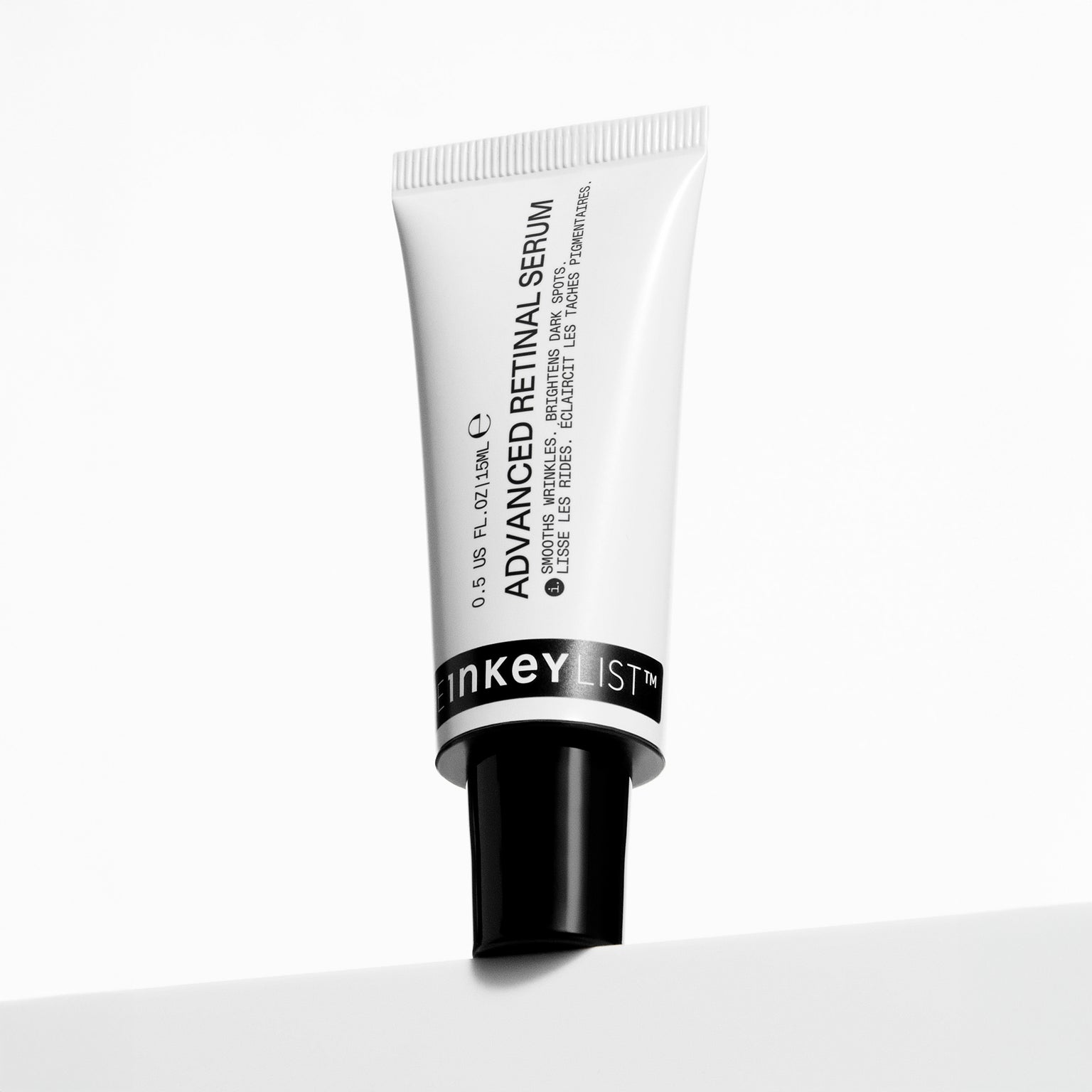
Stronger retinoids. The Ordinary's Retinol 0.5% in Squalane (around £8.40 for 30ml) and Retinol 1% in Squalane (around £9.00) are low-cost steps up; the squalane base suits drier skin. The Inkey List's 1% Retinol Serum (around £23.00 for 30ml) puts the same strength in a cream-serum with apricot kernel and avocado oils. The Inkey List's Advanced 0.2% Retinal Serum (around £15.00 for 15ml) is the catalogue's strongest retinal with a full ingredient list, and best kept for skin that already tolerates retinol well.
Gentler retinoids. If you are starting out or your skin is reactive, The Ordinary's Granactive Retinoid 5% in Squalane (around £15.90 for 30ml) uses hydroxypinacolone retinoate in an oil base. Their Granactive Retinoid 2% Emulsion (around £11.00) is a lighter cream version.
Barrier support. The Inkey List's Ectoin Hydro-Barrier Serum (around £15.00 for 30ml) is the only product in the catalogue whose ingredient list includes cholesterol alongside ceramides, with ectoin and hyaluronic acid. The Ordinary's Natural Moisturizing Factors + PhytoCeramides (around £9.60 for 30ml) pairs plant-derived ceramides with fatty acids and urea.
Richer moisturisers. The Inkey List's Bio-Active Ceramide Moisturiser (around £19.00 for 50ml) combines glycerin, shea butter and ceramide NP in a cream. Their 10% Urea Moisturiser (around £19.00 for 50ml) adds oat and squalane, and suits rough, dry patches. For a lighter option with niacinamide built in, The Inkey List's Omega Water Cream (around £11.00 for 50ml) has 5% niacinamide and a ceramide complex.
Vitamin C. The Ordinary's Ascorbyl Glucoside Solution 12% (around £14.10 for 30ml) is the gentler pick for dry skin. For ascorbic acid, The Inkey List's Vitamin C Serum (around £12.00 for 30ml) is waterless, which helps stability, but its listed 30% is above the useful range and may tingle.
Peptides. The Ordinary's Matrixyl 10% + HA (around £10.40 for 30ml) is a simple way to try Matrixyl 3000. Their Multi-Peptide + HA Serum (around £15.90 for 30ml) combines several peptides with hyaluronic acid, and the Multi-Peptide + Copper Peptides 1% Serum (around £28.90) adds copper tripeptide-1.
SPF. The Ordinary's UV Filters SPF 45 Serum (around £15.80 for 60ml) layers easily under make-up, and The Inkey List's Dewy Sunscreen SPF 30 (around £15.00 for 50ml) has a moisturising finish that suits drier skin. Both use chemical filters. If you want a higher factor, Purito's Daily Soft Touch Sunscreen SPF50+ (around £16.00 for 60ml) is another option, although the catalogue does not yet hold its full ingredient list.
Common Mistakes
Jumping straight to the strongest product. Starting at 1% retinol or a high-strength retinal because you feel behind usually ends in peeling and a retinoid left in the cupboard.
Stripping the skin. Foaming cleansers and frequent exfoliation that suited oilier skin a decade ago can leave drier skin tight and reactive. Switch to a cream or gel cleanser if your face feels tight after washing.
Keeping a light moisturiser out of habit. If your skin feels tight by mid-morning, or your retinoid is stinging more than it used to, a richer cream is often the fix.
Dropping SPF in winter. UVA, the part of sunlight most linked to ageing, is present year round and passes through cloud and glass.
Frequently Asked Questions
Is it too late to start anti-ageing skincare in your 40s? No. Retinoids have been shown to improve fine lines and collagen in much older skin, and daily SPF slows further damage at any age. You may see results more slowly than someone starting in their 20s, but you will still see them.
What strength of retinol should I use in my 40s? If you are new to retinoids, start around 0.2–0.3% and build up. If you have used retinol for a year or more, 0.5–1% retinol or a low-strength retinal is a sensible next step. Strength matters less than using it consistently.
Should I switch to a richer moisturiser in my 40s? Often, yes. Oil production falls and barrier lipids decline with age. If your skin feels tight, flaky or sensitive to products it used to tolerate, look for a cream with ceramides, a humectant such as glycerin and an emollient such as squalane.
Do I need different skincare for perimenopause? The core ingredients are the same, but dryness and sensitivity often increase, so barrier support becomes more important. Hormonal changes are a medical question as well as a skincare one, so speak to your GP if symptoms are affecting you.
Are peptides better than retinol for over-40s? No. Retinoids have far stronger evidence. Peptides are a gentle addition, or an alternative if you cannot use a retinoid, but they do not do the same job. See all products containing retinol and ceramide NP on the site to compare formulas side by side.